CLINE, E. H. Love, War, and Diplomacy: The Discovery of the Amarna Letters and the Bronze Age World They Revealed. Princeton: Princeton University Press, 2025, 272 p. – ISBN 9780691274089.
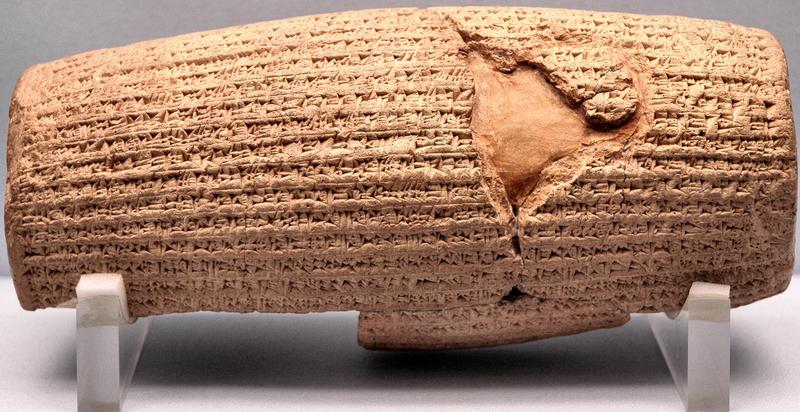
Em 1887, uma camponesa egípcia fez uma descoberta surpreendente entre as ruínas da capital do faraó Akhenaton, um sítio arqueológico hoje conhecido como Amarna. Ela encontrou um conjunto de tabuinhas cuneiformes, quase quatrocentas no total, que incluíam correspondências entre os faraós e as maiores potências da época, como os hititas, babilônios e assírios. Love, War, and Diplomacy narra a história das Cartas de Tell el-Amarna e o mundo dramático da Idade do Bronze que elas revelaram.
Combinando conhecimento acadêmico com meticulosa investigação, Eric Cline descreve a descoberta espetacular, a acirrada competição entre negociantes e museus para adquirir as tabuinhas e a corrida de estudiosos britânicos e alemães para traduzi-las. Datadas de meados do século XIV a.C., época dos predecessores imediatos de Tutankhamon, Amenófis III e seu filho Akhenaton, as Cartas de Tell el-Amarna são o único arquivo real conhecido do Reino Novo egípcio. Nelas, ficamos sabendo de casamentos reais, negociações diplomáticas, troca de presentes, intrigas e declarações de amor fraternal entre governantes poderosos, bem como das exigências feitas pelos pequenos reis de Canaã, que deviam lealdade aos faraós do Egito.
Uma obra monumental, Love, War, and Diplomacy transporta os leitores para a era gloriosa das Cartas de Tell el-Amarna e para o período colonial que as trouxe à luz, revelando como a política, as manobras políticas e as intrigas internacionais do antigo Oriente Médio não são tão diferentes das de hoje.
Leia também: CLINE, E. H. A.H. Sayce and His Search for Biblical Peoples and Places in the Amarna Letters. The Bible and Interpretation, December 2025.
In 1887, an Egyptian woman made an astonishing discovery among the ruins of the heretic king Akhenaten’s capital city, a site now known as Amarna. She found a cache of cuneiform tablets, nearly four hundred in all, that included correspondence between the pharaohs and the mightiest powers of the day, such as the Hittites, Babylonians, and Assyrians. Love, War, and Diplomacy tells the story of the Amarna Letters and the dramatic world of the Bronze Age they revealed.
 Blending scholarly expertise with painstaking detective work, Eric Cline describes the spectacular discovery, the fierce competition among dealers and museums to acquire the tablets, and the race by British and German scholars to translate them. Dating to the middle of the fourteenth century BCE and the time of Tutankhamun’s immediate predecessors, Amenhotep III and his son Akhenaten, the Amarna Letters are the only royal archive from New Kingdom Egypt known to exist. In them, we learn of royal marriages, diplomatic negotiations, gift-giving, intrigue, and declarations of brotherly love between powerful rulers as well as demands made by the petty kings in Canaan who owed allegiance to Egypt’s pharaohs.
A monumental achievement, Love, War, and Diplomacy transports readers to the glorious age of the Amarna Letters and the colonial era that brought them to light and reveals how the politics, posturing, and international intrigues of the ancient Near East are not so unlike today’s.
Sobre o autor: Eric H. Cline is professor of classics and anthropology and director of the Capitol Archaeological Institute at George Washington University, Washington, D. C. An active archaeologist, he has excavated and surveyed in Greece, Crete, Cyprus, Egypt, Israel, Jordan, and the United States.
Eric H. Cline diz na Introdução (Uma descoberta inesperada):
Ao rei, meu senhor e meu deus Sol, uma mensagem de Biridiya, o servo leal do rei. Eu me prostro aos pés do rei, meu senhor e meu deus Sol, sete vezes seguidas. O rei, meu senhor, deve saber que, após a entrada das tropas regulares no Egito, Lab’ayu guerreou contra mim, de modo que não conseguimos colher. Não conseguimos (nem mesmo) sair pelos portões da cidade por causa de Lab’ayu. Já que ele soube que as tropas regulares não estavam em campanha este ano, agora pretende capturar Meguido. Portanto, o rei deve resgatar sua cidade. Não deixe que Lab’ayu a tome! … Lab’ayu não tem outra intenção. Ele deseja tomar Meguido.
Speak to the king, my lord and my Sun god, a message from Biridiya, the loyal servant of the king. I fall at the two feet of the king, my lord and my Sun god, seven times and seven times. The king, my lord, should know that after the regular troops entered Egypt, Lab’ayu waged war against me so that we were unable to harvest. We were unable (even) to go out of the city gate on account of Lab’ayu. Since he learned that the regular troops were not campaigning this year, he now intends to capture Megiddo. So the king should rescue his city. Do not let Lab’ayu seize it! … Lab’ayu has no other intention. He desires to seize Megiddo. [Amarna Letter EA 244 (1)]
Esta carta chorosa de Biridiya, governante da Meguido cananeia, que estava em conflito com um rei vizinho e briguento chamado Lab’ayu [governante de Siquém], fazia parte de um arquivo de correspondência real que data do século XIV a.C., há mais de três mil anos. Escritas em quase quatrocentas tabuinhas de argila, as cartas deste arquivo foram descobertas inesperadamente no sítio arqueológico de Tell el-Amarna, no Egito, em 1887.
A história geralmente contada sobre a descoberta é que uma camponesa encontrou o arquivo enquanto buscava adubo nas ruínas de uma cidade antiga (2). A camponesa, no entanto, nunca mais foi localizada. Uma hipótese alternativa, defendida por alguns estudiosos, é que as tabuinhas foram, na verdade, descobertas por um notório negociante de antiguidades egípcio chamado Farag Ismain (também conhecido como Farag Ismail), que estaria escavando o local, provavelmente de forma ilícita, talvez já na primavera de 1887. Embora seja certamente possível que Ismain tenha iniciado suas escavações devido à descoberta inicial feita pela mulher local, acredita-se que ele tenha inventado e espalhado a história falsa para encobrir suas próprias atividades. Seja qual for a origem da descoberta, as primeiras tábuas foram oferecidas à venda para museus e colecionadores em setembro ou outubro daquele ano, no máximo (e possivelmente alguns meses antes) (3).
Na Antiguidade, a cidade onde as cartas foram encontradas era chamada de Akhetaten (que significa “o horizonte de Áton”); ela foi planejada e construída como uma nova capital pelo faraó Akhenaton, da Décima Oitava Dinastia. Ele foi uma figura famosa na história egípcia como o primeiro faraó a adorar uma única divindade, Áton, e foi pai do mais famoso egípcio de todos, o rei Tutankhamon.
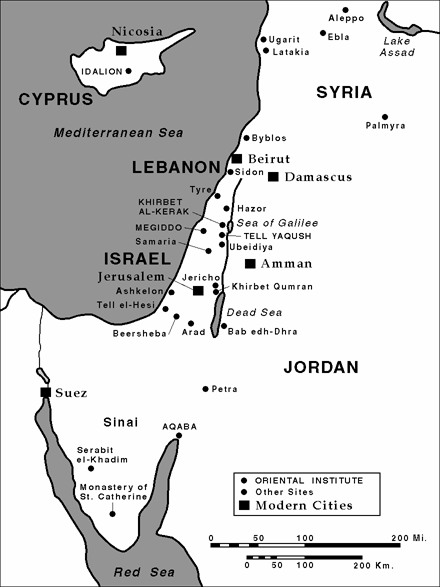
As centenas de tabuinhas de argila inscritas, desenterradas no sítio arqueológico, faziam parte de um arquivo real pertencente a Akhenaton e seu pai, Amenófis III. Elas incluem aproximadamente cinquenta cartas trocadas com outros “Grandes Reis” (uma tradução literal do acádio šarru rabû), desde os hititas na antiga Anatólia até os assírios e babilônios na Mesopotâmia, e outros em Chipre, Mitani e outros lugares. Há também cerca de trezentas cartas adicionais enviadas por governantes vassalos e semiautônomos de Canaã — a região que hoje corresponde à Síria, Líbano, Israel, Jordânia e Territórios Palestinos, sob domínio egípcio durante o século XIV a.C.
As cartas abrangem um breve período, de no máximo três décadas (cerca de 1360-1334 a.C.), desde o trigésimo ano do reinado de Amenófis III até o terceiro ano do reinado de Tutankhamon. A grande maioria foi aparentemente encontrada em um único edifício em Amarna, conhecido hoje como Edifício 19, mas originalmente chamado de algo como “A Casa das Cartas do Faraó — Vida, Prosperidade, Saúde”. O edifício servia tanto como um arquivo, o que explica a presença deste arquivo real, quanto, talvez, como um scriptorium, ou escola de escribas, pois também foram encontrados ali textos escolares (4).
Cada uma das cartas recebeu, há muito tempo (por volta de 1915), um número “EA”, que significa “El Amarna” (5). Como descreveu Alice Mandell, professora da Universidade Johns Hopkins, as cartas reais “estão dispostas geograficamente no sentido anti-horário da seguinte forma: Babilônia (EA 1–14), Assíria (EA 15–16), Mitani (EA 17–30), Arzawa (EA 31–32), Alashiya (EA 33–40) e a corte hitita (EA 41–44)”. As cartas adicionais, enviadas e recebidas pelos governantes cananeus vassalos e semiautônomos, seguem-se e são numeradas consecutivamente a partir de EA 45; atualmente, existem 349 cartas entre as 382 tabuinhas conhecidas de Amarna (as tabuinhas sem cartas consistem em exercícios de escribas, textos literários, etc.) (6).
Em todas essas Cartas de Amarna, podemos ouvir as vozes ancestrais dos autores, que registravam seus problemas, suas preocupações, suas necessidades e seus desejos, fossem eles de um Grande Rei ou de um humilde governante insignificante. Mas, do nosso ponto de vista, eles também estavam escrevendo história. Eles são história. E nós, para todos os efeitos, somos detetives forenses. Estamos investigando o mundo deles, que há muito desapareceu — o caso arquivado por excelência.
Ao utilizarmos fontes escritas antigas, como as Cartas de Amarna, e ao reunirmos os eventos e as pessoas que elas mencionam, podemos começar a descobrir o que aconteceu na antiguidade. Mas, assim como hoje, nem sempre podemos aceitar as coisas como elas se apresentam: precisamos ler atentamente o que está escrito, às vezes até mesmo lendo nas entrelinhas. Precisamos ponderar as evidências, julgar em quem podemos confiar e quem está nos manipulando, e descobrir a ordem precisa dos eventos e as motivações daquele período antigo. Nem sempre é simples, e talvez nem sempre tenhamos interpretado os fatos corretamente, mas, no geral, conseguimos construir uma ideia do que aconteceu com aquelas pessoas naqueles lugares, naquela época.
Meus principais objetivos neste livro são três.
Primeiro, quero contar a história básica da competição acadêmica e científica para traduzir as Cartas de Amarna após sua descoberta inicial em 1887. Acompanharemos essa história cronologicamente, mês a mês e ano a ano, especialmente considerando que as publicações dos estudiosos surgiram durante a primeira década, de 1887 a 1896, o que é fascinante por si só. Também é importante documentar com precisão a história da pesquisa nessa área antes que ela se perca, principalmente porque muitos dos primeiros artigos foram publicados em periódicos que hoje não são facilmente acessíveis a todos.
Em segundo lugar, quero contar a história do que estava acontecendo naquela época, baseando-me exclusivamente no conteúdo das próprias cartas, pois o século XIV a.C. foi um ponto alto na história do antigo Oriente Médio, situado quase exatamente no meio da Idade Recente do Bronze, que durou aproximadamente do século XVII até o colapso no início do século XII a.C. (7) Foi um ponto alto especialmente em termos de conexões internacionais envolvendo comércio e diplomacia entre todas as principais potências e governantes do antigo Oriente Médio na época, incluindo Amenófis III e Akhenaton do Egito; Assur-uballit da Assíria; Kadashman-Enlil e Burna-Buriash II da Babilônia; Tushratta de Mitani; e Suppiluliuma dos Hititas. Esses nomes podem ser desconhecidos para a maioria dos leitores neste momento, mas se tornarão figuras conhecidas nos primeiros capítulos e velhos conhecidos ao final do livro. Incluí também uma lista das pessoas mais relevantes, tanto modernas quanto antigas, no final do livro.
Alternarei a narrativa dessas duas histórias nas diferentes seções, para manter o ritmo ao longo da leitura.
Então, perto do final, como meu terceiro objetivo, investigaremos as cartas mais a fundo, usando alguns aspectos da Análise de Redes Sociais (ARS) – Social Network Analysis (SNA) – para ver se conseguimos determinar quem foram os personagens mais importantes nessa rede interconectada de governantes, tanto principais quanto secundários.
Em suma, espero que este volume também demonstre o quão fascinantes eram as relações e a história do Egito e do Mediterrâneo Oriental durante o século XIV a.C., e como, de certa forma, as coisas não são tão diferentes agora. Mesmo com as mudanças na tecnologia e nas sociedades, a natureza humana aparentemente não mudou. Nesta região em particular, a história antiga nem sempre é antiga, nem é apenas história, pois essa narrativa de pessoas e eventos que remontam a aproximadamente 3.400 anos atrás está tão entrelaçada com política e guerras, diplomacia e relações internacionais, e demonstrações públicas de uma forma ou de outra, quanto a mesma região do mundo hoje.
Notas e Bibliografia da Introdução
Notas
Introduction: An Unexpected Discovery
1. Translation following Lauinger and Yoder 2025, 373–74. See also Rainey 2015, 1001, 1003, 1561; previously Moran 1992, 298. In the following chapters, all translations from the vassal letters, unless otherwise noted, are by Jacob Lauinger and Tyler Yoder, whose translations are posted online as open access (CC BY-SA 3.0 license) and are now available in hard copy (2025). I am most grateful to them for permission to quote so extensively from their translations. A few of the translations of the vassal letters, and all of the translations from the great kings’ letters, follow Rainey 2015 or Moran 1992 instead, but appropriate reference is made in such instances. I have also taken the liberty of occasionally omitting the various scholarly apparati, such as brackets or parentheses, in cases where it seems clear that the restorations and / or readings are most likely correct, and have also upon occasion changed the spelling of a personal or place name so as to be consistent throughout (for instance, Lab’ayu rather than Lab’aya). In all cases, however, the original publication should be consulted as needed or desired.
2. The story has been repeated many times, sometimes with embellishments (i.e., the tablets were found in a wooden box, or in “an earthenware vessel,” according to some later discussions). See, e.g., Campbell 1964, 32–36, with references; Rainey and Notley 2006, 87–88; Thompson 2020, 36.
3. See Mynářová 2007, 11–33, esp. 13–15; 2015, 38–39, both with references for a discussion of where, when, and by whom the tablets might have first been found; also Campbell 1964, 33–36; Mandell 2015, 32–35; Artzi 1985, 8–9; Mandell forthcoming-a. See also, e.g., Budge 1888, 540; Sayce 1888e, 488; 1889b; Bezold and Budge 1892, I; Knudtzon 1907 / 1915, 4–7.
4. On the original name of the building, I have followed Moran 1992, xvi; and Bryce 2003, 223; see also Mynářová 2014, 16–17. On the origins of the tablets that came in from abroad, see, e.g., Goren, Finkelstein, and Na’aman 2004, 1, and their very important discussions throughout the volume, looking at the petrography of each of the tablets in order to identify where it was actually made; also Podany 2010, 186–87, 191–92.
5. Knudtzon 1907 / 1915; see Campbell 1964, 31; Artzi 1985, 4–6.
6. Mandell 2015, 45n99; Rainey 2015, 1–2, 9. See also the various itemizing lists in Moran 1992; Rainey 2015; Mynářová 2007; 2014; 2015; and Goren, Finkelstein, and Na’aman 2004, 1.
7. I have discussed this time period briefly elsewhere, most recently in chapter 2 of 1177 BC: The Year Civilization Collapsed (revised edition, 2021). This book represents a deep dive specifically into the material found on pages 49–55 of that book, where the Amarna archive and the Amarna Letters are briefly discussed.
Bibliografia
Artzi, P. 1985. “The Present State of the Amarna Documents.” Proceedings of the World Congress of Jewish Studies 1985: 3–16.
Bezold, C., and E.A.W. Budge. 1892. The Tell el-Amarna Tablets in the British Museum with Autotype Facsimiles. London: Trustees of the British Museum.
Bryce, T. 2003. Letters of the Great Kings of the Ancient Near East: The Royal Correspondence of the Late Bronze Age. London: Routledge.
Budge, E.A.W. 1888. “On Cuneiform Despatches from Tushratta, King of Mitanni, Burraburiyash the son of Kuri-Galzu, and the King of Alashiya, to Amenophis III, King of Egypt, and on the Cuneiform Tablets from Tell el-Amarna.” Proceedings of the Society of Biblical Archaeology 10: 540–69.
Campbell, E. F., Jr. 1964. The Chronology of the Amarna Letters, with Special Reference to the Hypothetical Coregency of Amenophis III and Akhenaten. Baltimore: Johns Hopkins University Press.
Cline, E. H. 2021. 1177 BC: The Collapse of Civilization. Revised and updated edition. Princeton, NJ: Princeton University Press.
Goren, Y., I. Finkelstein, and N. Na’aman, 2004. Inscribed in Clay: Provenance Study of the Amarna Tablets and Other Ancient Near Eastern Texts. Tel Aviv: Emery and Claire Yass Publications in Archaeology.
Knudtzon, J. A.1907 / 1915. Die El-Amarna Tafeln. 2 vols. Leipzig: J. C. Hinrichs.
Lauinger, J., and T. R. Yoder. 2025. The Amarna Letters: The Syro-Levantine Correspondence. Columbus, GA: Lockwood Press.
Mandell, A. H. 2015. “Scribalism and Diplomacy at the Crossroads of Cuneiform Culture: The Sociolinguistics of Canaano-Akkadian.” PhD diss., University of California, Los Angeles.
Mandell, A. H. Forthcoming-a. Cuneiform Culture and the Ancestors of Hebrew. The Ancient World Series. London: Routledge.
Moran, W. L. 1992. The Amarna Letters. Baltimore: Johns Hopkins University Press.
Mynářová, J. 2007. Language of Amarna—Language of Diplomacy: Perspectives on the Amarna Letters. Prague: Czech Institute of Egyptology.
Mynářová, J. 2014. “Egyptian State Correspondence of the New Kingdom: The Letters of the Levantine Client Kings in the Amarna Correspondence and Contemporary Evidence.” In State Correspondence in the Ancient World: From New Kingdom Egypt to the Roman Empire, edited by K. Radner, 10–31. Oxford: Oxford University Press.
Mynářová, J. 2015. “Discovery, Research, and Excavation of the Amarna Tablets—The Formative Stage.” In The El-Amarna Correspondence: A New Edition of the Cuneiform Letters from the Site of El-Amarna Based on Collations of all Extant Tablets, vol. 1, edited by A. S. Rainey and W. M. Schniedewind, 37–54. Leiden: Brill.
Podany, A. 2010. Brotherhood of Kings: How International Relations Shaped the Ancient Near East. Oxford: Oxford University Press.
Rainey, A. S. 2015. The El-Amarna Correspondence: A New Edition of the Cuneiform Letters from the Site of El-Amarna Based on Collations of All Extant Tablets. 2 vols. Edited by W. M. Schniedewind. Leiden: Brill.
Rainey, A. S., and R. S. Notley. 2006. The Sacred Bridge: Carta’s Atlas of the Biblical World. Jerusalem: Carta.
Sayce, A. H. 1888e. “Babylonian Tablets from Tell el-Amarna, Upper Egypt.” Proceedings of the Society of Biblical Archaeology 10: 488–527.
Sayce, A. H. 1889b. “The Cuneiform Tablets of Tel el-Amarna, Now Preserved in the Boulaq Museum.” Proceedings of the Society of Biblical Archaeology 11 (June): 326–413.
Thompson, J. 2020. A History of Egyptology. Vol. 2, The Golden Age: 1881–1914. Cairo: American University in Cairo Press.