Os sítios arqueológicos mais importantes do Iraque, incluindo Ur e Babilônia, estão sofrendo sérios danos devido às mudanças climáticas, com secas, queda do nível dos rios, tempestades de areia e alta salinidade erodindo templos, palácios e cemitérios antigos.
Leia a reportagem do The New Region, de 01.11.2025: Iraqi heritage sites under severe threat from climate change
ERBIL, Região do Curdistão do Iraque – O Iraque enfrenta hoje uma ameaça existencial que põe em risco sua memória civilizacional devido às mudanças climáticas. A seca, o declínio dos rios Tigre e Eufrates, as tempestades de areia e os altos níveis de salinidade estão destruindo sítios arqueológicos como Ur e Babilônia. A desertificação avança sobre o berço das civilizações e ameaça soterrar marcos históricos milenares, em meio à ausência de planos nacionais para preservar essa história.
Um relatório recente da Reuters [Cradle of civilisation at risk of erosion in Iraq due to climate change – October 30, 2025] confirmou que o Iraque enfrenta agora um dilema existencial que ameaça sua memória cultural e patrimonial, observando que a terra da Mesopotâmia, berço da escrita, da agricultura e das primeiras cidades, está à beira de uma nova forma de extinção, desta vez não desencadeada por guerras, mas pelos severos efeitos das mudanças climáticas que corroem monumentos e sítios históricos.
Nos últimos anos, as terras iraquianas, especialmente nas regiões do sul, transformaram-se em extensões áridas consumidas pela desertificação, com aumentos sem precedentes nos níveis de salinidade. Os níveis de água dos rios Tigre e Eufrates recuaram, enquanto as tempestades de areia se intensificaram, soterrando camadas de história que remontam a milhares de anos. A cada nova tempestade, partes da memória material do berço da civilização são sepultadas.
A civilização à mercê do clima
Autoridades iraquianas soaram o alarme para salvar sítios arqueológicos de algumas das cidades mais antigas do mundo, à medida que os efeitos das mudanças climáticas começam a devastar seus componentes arquitetônicos. Na cidade de Ur, dunas de areia começaram a corroer o lado norte do famoso zigurate construído há mais de 4.000 anos para o deus lunar Nanna.
Em entrevista ao The New Region, Shamil al-Rumaidh, Inspetor Geral de Antiguidades em Dhi Qar, enfatizou a influência direta das mudanças climáticas nos sítios arqueológicos.
Ele destacou as tempestades de areia e as chuvas como fatores primordiais, particularmente relevantes considerando que numerosos sítios arqueológicos se encontram ao longo do caminho das dunas de areia que se movem para o norte na região de “al-Katia” em Dhi Qar.
Rumaidh explicou que os fatores de erosão levaram a alterações significativas no zigurate de Ur ao longo do último milênio. Sua altura original de 26 metros diminuiu para aproximadamente 16 metros, encolhendo a uma taxa de cerca de um metro a cada 200 anos.
O zigurate, inscrito pela UNESCO na Lista do Patrimônio Mundial, é considerado um dos marcos mais importantes, oferecendo uma visão das práticas religiosas e rituais sagrados de UR III. Não muito longe do templo, o cemitério real de Ur, descoberto pelo arqueólogo britânico Leonard Woolley na década de 1920, também está se deteriorando.
Em outubro de 2024, a Inspetoria de Antiguidades de Dhi Qar anunciou que a reabilitação e reconstrução de Dub Lakh, um dos templos mais antigos do mundo, está em andamento em Ur. O templo sofreu danos durante anos devido aos efeitos das mudanças climáticas.
Vale ressaltar que o Iraque enfrenta o aumento das temperaturas e uma seca severa, que elevaram os níveis de salinidade no sul do país, onde os rios Tigre e Eufrates se encontram em sua aproximação ao Golfo.
Babilônia em perigo
A ameaça não se limita apenas à cidade de Ur. Segundo reportagem da Reuters, a cidade da Babilônia, lendária capital de antigos impérios, também enfrenta o mesmo destino. Muntasser Hasnawi, diretor-geral do Departamento de Antiguidades do Ministério da Cultura e Turismo do Iraque, confirmou que os sítios arqueológicos da antiga Babilônia estão em risco devido aos grandes desafios causados pela falta de financiamento, observando que os altos níveis de salinidade estão enfraquecendo os materiais à base de barro com os quais os antigos templos e palácios foram construídos.
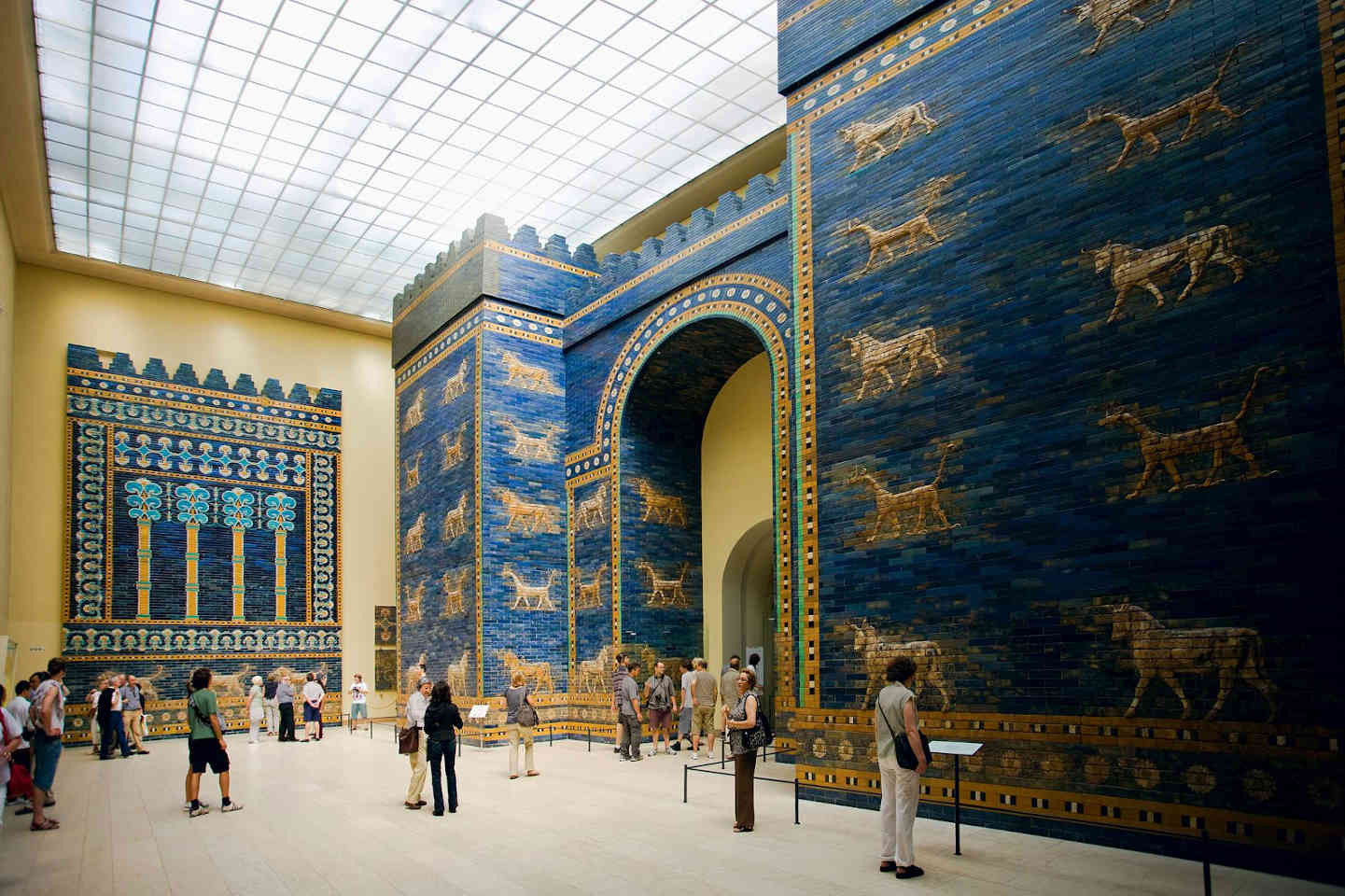 Hasnawi salientou que muitas das operações de restauro realizadas nas décadas anteriores eram frequentemente inadequadas, o que tornou as estruturas antigas mais frágeis face às alterações climáticas.
Ele também alertou que o agravamento da salinidade das águas subterrâneas e superficiais poderia levar à destruição de cidades inteiras ainda enterradas no subsolo, numa referência a sítios arqueológicos ainda não descobertos nas planícies do sul do Iraque.
Entre o passado e o futuro
O Iraque, que legou ao mundo o primeiro código legal escrito da história por meio da Lei de Hamurabi entre 1750 e 1755 a.C., as primeiras cidades com estruturas sociais, econômicas e políticas complexas, como Uruk e Ur, e os primeiros sistemas de governo e regulamentações codificadas, agora se vê diante de uma nova guerra, desta vez contra a fúria da natureza. As mudanças climáticas não apenas trazem consequências para a agricultura, a água e a vida cotidiana, mas também ameaçam os próprios alicerces da identidade histórica do país.
O relatório alerta que, com a seca contínua e o avanço das areias, as gerações futuras poderão acordar e descobrir que monumentos de uma civilização de 7.000 anos foram engolidos pela poeira. A cada nova camada de areia que se forma sobre eles, mais uma página da história da humanidade é enterrada, ameaçando condenar o legado de milênios de história e cultura a um destino indigno.
Além do que:
O país já sofreu décadas de guerras que ameaçaram suas estruturas históricas – da guerra com o Irã na década de 1980, à Guerra do Golfo no início da década de 1990, à invasão liderada pelos EUA em 2003, seguida por violência insurgente e pela ascensão e queda do grupo Estado Islâmico.
The country has already endured decades of warfare that threatened its historical structures – from war with Iran in the 1980s, to the Gulf War of the early 1990s, the 2003 U.S.-led invasion followed by insurgent violence and the rise and fall of the Islamic State group (Reuters).
Iraqi heritage sites under severe threat from climate change
Iraq’s most important archaeological sites, including Ur and Babylon, are facing serious damage due to climate change, with drought, falling river levels, sandstorms, and high salinity are eroding ancient temples, palaces, and cemeteries.
ERBIL, Kurdistan Region of Iraq – Iraq today faces an existential threat endangering its civilizational memory due to climate change. Drought, the decline of the Tigris and Euphrates rivers, sandstorms, and high salinity levels are destroying archaeological sites such as Ur and Babylon. Desertification is encroaching on the cradle of civilizations and threatens to bury landmarks that are thousands of years old, amid the absence of national plans to save this history.
A recent report by Reuters [Cradle of civilisation at risk of erosion in Iraq due to climate change – October 30, 2025] confirmed that Iraq now faces an existential dilemma that threatens its cultural and heritage memory, noting that the land of Mesopotamia, which gave birth to writing, agriculture, and the first cities, stands on the verge of a new form of extinction, not triggered this time by wars, but by harsh climate change effects eroding and monuments and historical sites.
Iraqi lands in recent years, especially in southern regions, have turned into dry expanses consumed by desertification, with unprecedented increases in salinity levels. The water levels of the Tigris and Euphrates have receded, while sandstorms have intensified, burying under them layers of history that stretch back thousands of years. With every new storm, parts of the material memory of the cradle of civilization are entombed.
Civilization at the mercy of the climate
Iraqi officials have sounded the alarm to save sites considered some of the oldest cities in the world, as the winds of climate change begin to ravage their architectural components. In the city of Ur, the birthplace of the Prophet Abraham, sand dunes have begun eating away at the northern side of the famous ziggurat, a massive pyramid-shaped temple built more than 4,000 years ago for the moon god Nanna.
During an interview with The New Region, Shamil al-Rumaidh, the Comprehensive Inspector of Antiquities in Dhi Qar, emphasized the direct influence of climate change on archaeological landmarks.
He highlighted sandstorms and rainfall as primary factors, particularly noteworthy given that numerous archaeological sites lie along the path of northward-moving sand dunes in “al-Katia” region of Dhi Qar.
Rumaidh elaborated that erosion factors have led to significant alterations in the Ziggurat of Ur over the past millennium. Its original height of 26 meters has dwindled to approximately 16 meters, shrinking at a rate of roughly one meter every 200 years.
The temple, which UNESCO has inscribed on the World Heritage List, is considered one of the most prominent landmarks offering insight into religious practices and sacred rituals in the Sumerian Empire. Not far from the temple, the royal cemetery of Ur, discovered by British archaeologist Leonard Woolley in the 1920s, is also deteriorating.
Dhi Qar’s antiquities inspectorate in October 2024 announced that the rehabilitation and reconstruction of Dub Lakh, one of the world’s oldest temples, is underway in Ur. The temple has for years been damaged due to the effects of climate change.
It is worth noting that Iraq is facing rising temperatures and severe drought that have increased salinity levels in the south of the country, where the Tigris and Euphrates rivers meet as they approach the Gulf.
Babylon in danger
The threat is not limited to the city of Ur alone. According to the Reuters report, the city of Babylon, the legendary capital of ancient empires, is also facing the same fate. Muntasser Hasnawi, the Director General of the Antiquities Department at the Iraqi Ministry of Culture and Tourism, confirmed that the archaeological sites in ancient Babylon are at risk amid difficult challenges caused by a lack of funding, noting that high salinity levels are weakening the mud-based materials from which ancient temples and palaces were built.
 Hasnawi pointed out that many of the restoration operations carried out in previous decades were often unsuitable, which has made ancient structures more fragile in the face of climate change.
He also warned that the worsening salinity of groundwater and surface water could lead to the destruction of entire cities still buried underground, a reference to undiscovered archaeological sites in the plains of southern Iraq.
Between past and future
Iraq, which gave the world the first written legal code in history through Hammurabi’s Law between 1750 and 1755 BC, the first cities with complex social, economic, and political structures such as Uruk and Ur, and the earliest systems of governance and codified regulations, now finds itself facing a new war, this time against the fury of nature. Climate change not only brings consequences for agriculture, water, and daily life, but also threatens the very foundation of the country’s historical identity.
The report warns that with continued drought and advancing sands, future generations may awaken to find that monuments from a 7,000-year-old civilization have been swallowed by dust. With every new layer of sand that forms above them, another page of human history is buried, threatening to condemn the legacy of millenia of history and culture to an unworthy fate.
Fonte: The New Region – Nov. 01, 2025
Leia também: Iraq preparing $14.5 million renovation of ancient city of Ur – The New Arab – 03 December, 2025