Sites da semana, indicados por Andie Byrnes, sobre o Egito e a egiptologia.
Em Egyptology News, 23 de setembro de 2007.
 airtonjo
Gn 1-11 e a importância dos mitos
Acabei de ler um post de Christopher Heard em seu biblioblog Higgaion com o título de Teaching the Genesis creation stories. Ali ele relata sua experiência de trabalhar em sala de aula com Gn 1-11 e o que funciona ou não, em termos de compreensão por parte dos alunos, quando se faz uma abordagem literária destes textos.
Mas relata também um incrível caso: um outro professor norte-americano, de outra instituição que não a sua, teria sido recentemente punido por sua escola por explicar que a estória de Adão e Eva tem um sentido simbólico e que não deve ser lida literalmente.
[Bitterman said]: “I told them it was an extremely meaningful story, but you had to see it in a poetic, metaphoric or symbolic sense, that if you took it literally, that you were going to miss a whole lot of meaning there“. Traduzindo de maneira mais ou menos livre: “Eu disse [aos alunos] que esta [Gn 2-3] era uma história extremamente significativa, mas que deve ser vista em um sentido poético, metafórico ou simbólico, pois se for lida literalmente, se perde uma grande parte de seu significado”.O caso chamou minha atenção, pois leciono Pentateuco, trabalho com estes textos, e acho complicado que alguém ainda possa ser punido por razão tão absurda. Mais absurda ainda se considerarmos os séculos de pesquisa histórico-crítica sobre tão conhecidos textos de Gênesis. E em um país que detém a hegemonia política mundial, que produz uma quantidade enorme de pesquisa exegética e científica, que possui todos os meios possíveis para debater a relação da ciência com a fé… Mas é um país plural. E estas contradições são cada vez maiores, com o crescimento de um criacionismo fundamentalista. Que, por sinal, já chegou aqui, de lá importado.
Pois é! Christopher Heard, que também considera esta situação absurda, por outro lado diz que, mesmo não vivendo esta realidade em sua Universidade, há colegas seus que chegam a evitar a palavra “mito” ao falar destes assuntos: “…even at Pepperdine, I know that my colleagues sometimes choose their words very carefully to avoid certain vocabulary (‘myth’) while communicating the same concepts“.
Leiam o caso. E considerem que estamos no Mês da Bíblia, que tem como tema Gn 1-11, e que nossas abordagens são bastantes enriquecedoras, se considerarmos o material utilizado tanto na academia quanto no meio popular. Apesar de nossos limitados recursos. Retomem a leitura dos posts que escrevi com os títulos de Gn 1-11 na Vida Pastoral e CEBI recomenda para o Mês da Bíblia.
Finalmente, quero lembrar que, ainda em 1995, escrevi um texto curtinho sobre Gn 1-11 para uma revista de divulgação de Ribeirão Preto. E expliquei, com linguagem simples, o que chamei de
Os mitos judaicos e a nossa realidade
Ainda faltavam uns 500 ou 600 anos para o nascimento de Jesus de Nazaré, quando alguns teólogos de Jerusalém recolheram histórias que as pessoas contavam e escreveram vários desses textos que hoje estão na Bíblia Hebraica, no livro do Gênesis, nos capítulos 1 a 11.
Que textos são esses?
São muito conhecidos: a história da serpente que tenta Eva no paraíso, a árvore que produz um fruto proibido, Caim que assassina seu irmão Abel, Noé e sua arca cheia de animais sobrevivendo ao dilúvio, a torre de Babel que confunde as línguas…
Será que isto aconteceu desse jeito mesmo que é contado? Ou serão só lendas, contos ou mitos?
Às vezes a gente acha que só é verdadeira aquela história que reproduz os fatos fielmente, tim-tim por tim-tim, como eles aconteceram. Será? E aqueles fatos que acontecem com todo o mundo e que também podem acontecer em qualquer época e em qualquer lugar? E o sentido que um autor quer dar a um acontecimento não determina o jeito dele contar?
Pois isto é o mito. E o mito fala de uma experiência humana universal. E Gn 1-11 é recheado de mitos, contados por aqueles autores anônimos de Jerusalém há dois mil e quinhentos anos.
O paraíso nunca existiu. Nem mesmo uma serpente falante, um fruto proibido, os irmãos Caim e Abel, um dilúvio universal, uma arca de Noé ou uma torre de Babel. Mas todos eles existem sempre, exatamente porque não estão situados em nenhum tempo e lugar.
O paraíso é uma esperança, uma utopia, não uma saudade de um tempo passado. É uma esperança de harmonia e felicidade que a humanidade deve construir. E pode construir.
A serpente representava, na época dos reis de Israel, um sistema social e político que explorava as pessoas e provocava a sua infelicidade, destruindo o projeto de uma sociedade solidária e harmoniosa.
O fruto proibido é a tentação de possuir um poder absoluto que nos permita dominar os outros e escravizá-los aos nossos interesses.
Tanto Caim quanto Abel continuam hoje a se confrontar em sangrentos conflitos, seja em nossas ruas brasileiras, seja no Oriente Médio, ou em nossas casas.
A fidelidade de Noé, um homem correto, a um projeto de sociedade solidária, o transforma em símbolo de uma humanidade que renasce de enormes catástrofes porque acredita na vida.
Na cidade e torre de Babel as pessoas são confundidas por Iahweh quando queriam construir um poder imperialista onde todos falariam uma mesma língua – na política, na economia, na cultura – e, assim se tornariam absolutos, decretando o fim da liberdade humana.
Como se vê, esses temas tão antigos, contados na linguagem do mito, continuam extremamente atuais dois mil anos depois de Jesus de Nazaré. Devem ser lidos para fazer a gente pensar e tomar uma atitude. Não para pensarmos no que aconteceu antigamente, mas para enxergarmos melhor o está acontecendo hoje e ver o que é possível fazer para melhorar o mundo.
Este texto pode ser lido também na seção de artigos da Ayrton’s Biblical Page. Clique aqui.
BibleWorks Classroom Resources
BibleWorks explica a novidade em seu site:
Each semester, professors are finding that BibleWorks can help them in the classroom. Below, we’ve assembled tips for using BibleWorks in the classroom. New tips come out regularly. If you would like to be notified via email when a new tip is published, click here to sign up.
Se você é professor de Bíblia, inscreva-se na Classroom Tips mailing list para receber, via e-mail, as dicas do programa sobre como utilizá-lo com maior proveito em suas aulas.
Joachim Jeremias
Jim West está nos lembrando que o famoso exegeta alemão do Novo Testamento Joachim Jeremias nasceu em 20 de setembro de 1900.
Quando escrevi minha dissertação de Mestrado na década de 70, sobre a Parábola das Dez Virgens (Mt 25,1-13), fui fortemente influenciado pelo conhecido livro de Jeremias, Die Gleichnisse Jesu, ou, em inglês, The Parables of Jesus.
Meu orientador foi o Prof. Dr. Ugo Vanni, da Gregoriana e do Bíblico, em Roma.
Certa vez falei sobre isso neste blog aqui.
No Brasil, este livro de Joachim Jeremias, As parábolas de Jesus, foi publicado pela Paulus. Está na oitava edição, com data de 1997. ISBN: 8534907005.
Desaparecimento das línguas, inclusive no Brasil
Metade das línguas do mundo corre risco de sumir, aponta estudo
Metade das cerca de 7.000 línguas faladas hoje em todo o mundo deve sumir até o final do século, em alguns casos à velocidade aproximada de uma extinção a cada 14 dias. A estimativa catastrófica é resultado de uma investigação financiada pela National Geographic Society, que apontou as cinco regiões do planeta onde há mais línguas ameaçadas de extinção. Um dos “hotspots” inclui o Estado de Rondônia.
“As línguas estão passando por uma crise global de extinção, que excede enormemente o ritmo das extinções de espécies”, declarou o lingüista David Harrison, do Instituto Línguas Vivas, na terça-feira (18).
Ele e seu colega Gregory Anderson viajaram pelo mundo inteiro ao longo de quatro anos para entrevistar e gravar os últimos falantes de algumas das línguas mais ameaçadas.
Após o levantamento eles perceberam que as regiões mais críticas são Sibéria oriental, norte da Austrália, centro da América do Sul, Oklahoma e litoral noroeste do Pacífico nos EUA e Canadá. “Estamos vendo na frente dos nossos olhos a erosão da base do conhecimento humano”, disse Harrison.
O sumiço das línguas têm ocorrido tanto por morte das pequenas populações que ainda as falam quanto pelo simples desuso das línguas. Elas não são passadas para as novas gerações, que falam apenas a língua mais comum no país, como português, no Brasil, e toda a cultura daquele povo acaba ficando restrita aos mais velhos da tribo. Quando eles morrerem, o conhecimento dessa população morrerá junto.
“Oitenta porcento das espécies do mundo ainda não foram descobertas pela ciência, mas não significa que elas sejam desconhecidas dos humanos”, lembra Harrison. Com a perda da língua, diz ele, estão sendo jogados fora séculos de descobertas feitas pela humanidade.
O país mais crítico é a Austrália. Das 231 línguas aborígenes existentes, 153 estão em risco muito alto. No norte do país os pesquisadores acharam um único falante de amurdag, língua já considerada extinta. “Esta é provavelmente uma língua que não vai voltar, mas pelo menos fizemos uma gravação dela”, conta Anderson.
Risco Brasil
Pelo levantamento feito pela National Geographic, as línguas de povos que vivem em Rondônia apresentam um nível de risco muito alto de sumir, enquanto as línguas faladas por populações indígenas do centro-sul do Brasil estão em alto risco. Lingüistas que estudam o problema no país, no entanto, acreditam que a situação aqui é bem pior que a demonstrada por Harrison e Anderson.
A dupla considera, por exemplo, que o wayoró é falado por cerca de 80 pessoas em Rondônia. Segundo Denny Moore, do Museu Emílio Goeldi, são menos de dez os falantes.
Outros povos nem chegaram a figurar entre os de língua mais ameaçada pelos americanos. Um caso é dos canauê, também de Rondônia, cuja língua é falada por oito pessoas.
Fonte: Giovana Girardi – Folha de S. Paulo: 20/09/2007
História dos idiomas mapeia Babel de hoje
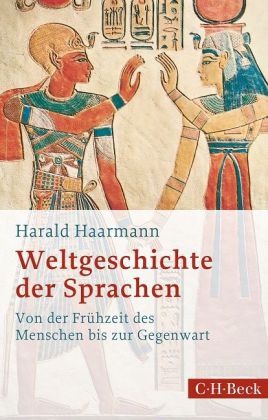
HAARMANN, H. Weltgeschichte der Sprachen: Von der Frühzeit des Menschen bis zur Gegenwart. München: C.H. Beck 2016, 400 p. – ISBN 9783406694615.
“História Mundial dos Idiomas – Da Pré-História até Hoje” amplia os nossos limites geoculturais, abordando a evolução da comunicação verbal humana e a disseminação das 6.417 línguas faladas em todo o mundo.
Na verdade, o mundo não é tão pequeno assim quanto a nossa acepção de “mundo”. Essa é a impressão imediata de quem lê a História Mundial dos Idiomas, de Harald Haarmann. Em quase 400 páginas, o linguista alemão redimensiona o mapa-múndi do leitor no tempo e no espaço.
O mérito dessa abordagem da pluralidade linguística não é apenas servir como obra de referência sobre as línguas faladas hoje em todo o mundo. O enfoque historiográfico faz pensar no curioso fato de que a capacidade de se comunicar oralmente através de uma estrutura complexa de signos, como a que conhecemos hoje das línguas modernas, é relativamente recente entre os hominídeos.
Infância das línguas
 Os estágios hipotéticos de evolução linguística da humanidade apontam para fases de organização verbal análogas à aquisição natural do idioma materno por uma criança. A comunicação através de sinais e interjeições, a nomeação do ambiente à volta, a fala elementar sobre coisas e eventos e, por fim, o desenvolvimento de estruturas linguísticas complexas representam as quatro fases da evolução das línguas até o homem moderno.
Mas essa obra historiográfica não amplia somente o horizonte temporal em que costumamos conceber o “mundo”. Os limites geoculturais em que nos movemos também começam a nos parecer bastante restritos durante a leitura. E talvez seja justamente o contato com culturas de regiões distantes que nos torne novamente presente o quanto a nossa língua é limitada por nosso espaço de vida e atuação.
Se as expressões alemãs para alguns tipos de neve já sobrecarregam qualquer tradutor do português, qual não seria a dificuldade de traduzir para qualquer outra língua as 21 denominações de neve existentes em inari-saami, uma língua falada na Finlândia? Um exemplo do grau de diferenciação é o termo “ceeyvi”, que significa “neve que surge sob ventos fortes e se endurece tanto a ponto de uma rena não conseguir mais procurar comida por baixo”.
Babel das correntes migratórias
Essa História Mundial do Idiomas não é, no entanto, tão anedótica como poderia ser, mas serve como base de consulta prática. Quem quiser recapitular como o latim vulgar se ramificou nos diversos idiomas românicos encontra aqui um panorama sucinto. E quem quiser, para ir mais longe, entender as ramificações do indo-europeu pode se aprofundar nas correntes migratórias ocorridas na Eurásia há 9 mil anos.
Haarmann também descreve, quando oportuno, o desenvolvimento das investigações e descobertas arqueológicas, paleográficas e linguísticas que estão por trás do atual estágio de conhecimento sobre a evolução das línguas. O caso da reconstrução do indo-europeu, uma língua hipotética deduzida da semelhança lexical entre determinados idiomas, é especialmente elucidativo dos procedimentos científicos da lingüística diacrônica.
Diversidade linguística em números
O aparato de dados numéricos e estatísticos tornam esse livro ainda mais útil. Teoricamente, temos uma vaga noção da distribuição dos idiomas em todo o mundo, mas os números também podem corrigir algumas imagens equivocadas.
O fato de as línguas faladas na Europa terem alcance mundial e delimitarem o nosso universo cultural geralmente nos faz esquecer do quanto essa aparente hegemonia é relativa. Pelo menos numericamente, a Europa – com todas sua diversidade linguística – é o continente com o menor número de idiomas nativos (apenas 143, em comparação com 1.906 na Ásia, 1.821 na África, 1.268 no Pacífico, e 1.013 nas Américas).
O número de línguas registradas no Brasil (236) supera de longe, portanto, a quantidade de idiomas falados na Europa. E talvez também não seja de conhecimento geral, por exemplo, que o português é a oitava língua mais falada do mundo, depois do chinês, inglês, híndi, espanhol, russo, árabe e bengali. Apenas algumas entre inúmeras informações a serem conferidas nesse livro.
Fonte: Simone de Mello – DW: 16.09.2007
Aviso aos navegantes: Guestbook desativado
O Livro de Visitas está, na Ayrton’s Biblical Page, desativado.
Lamento pelo transtorno. Eventuais comentários podem ser feitos no biblioblog Observatório Bíblico.
Resenhas na RBL – 18.09.2007
As seguintes resenhas foram recentemente publicadas pela Review of Biblical Literature:
Peter Jeffery
The Secret Gospel of Mark Unveiled: Imagined Rituals of Sex, Death, and Madness in a Biblical Forgery
Reviewed by Scott G. Brown – Essay review (47 pages)
Peter Busch
Magie in neutestamentlicher Zeit
Reviewed by Mladen Popović
Ole Davidsen, Rolv Nøtvik Jakobsen, Stefan Klint, and Kirsten Nielsen, eds.
Litteraturen og det hellige
Reviewed by Søren Holst
Martin Goodman
Judaism in the Roman World: Collected Essays
Reviewed by Judith M. Lieu
Sigurd Hjelde
Sigmund Mowinckel und seine Zeit: Leben und Werk eines norwegischen Alttestamentlers
Reviewed by Mark E. Biddle
Isaac Kalimi and Peter J. Haas, eds.
Biblical Interpretation in Judaism and Christianity
Reviewed by Craig A. Evans
Klaus Koch; Friedhelm Hartenstein and Martin Rösel
Der Gott Israels und die Götter des Orients: Religionsgeschichtliche Studien II
Reviewed by Michael S. Moore
Andreas Köhn, ed.
Ernst Lohmeyers Zeugnis im Kirchenkampf: Breslauer Universitätspredigten
Reviewed by Michael Labahn
Michelle V. Lee
Paul, the Stoics, and the Body of Christ
Reviewed by Richard A. Wright
Marc J. H. Linssen
The Cults of Uruk and Babylon: The Temple Ritual Texts as Evidence for Hellenistic Cult Practices
Reviewed by Hector Avalos
Alastair H. B. Logan
The Gnostics: Identifying an Early Christian Cult
Reviewed by Jon Ma. Asgeirsson
Tremper Longman III
Proverbs
Reviewed by Katharine Dell
Francisco Lozada Jr. and Tom Thatcher, eds.
New Currents Through John: A Global Perspective
Reviewed by Uta Poplutz
David Pastorelli
Le Paraclet dans le corpus johannique
Reviewed by Jörg Frey
Vincent A. Pizzuto
A Cosmic Leap of Faith: An Authorial, Structural, and Theological Investigation of the Cosmic Christology in Col 1:15-20
Reviewed by Matthew E. Gordley
Gregory Wong
Compositional Strategy of the Book of Judges: An Inductive, Rhetorical Study
Reviewed by Klaas Spronk
Biblical Studies Carnival: considere 10 linguas!
Uma boa média, não acham? Inglês, alemão, francês, italiano, neerlandês, espanhol, português… o que mais sugerem?
Tim Bulkeley, que é da Nova Zelândia, e que está encarregado do Biblical Studies Carnival deste mês, está aceitando a sugestão de fazer um “Carnival” que considere posts em outras línguas além do inglês.
Releiam meu post de 7 de outubro de 2006: Quantos idiomas deveria um biblista dominar?
Há também vários posts do Jim West sobre o “barreira” linguística – línguas modernas – construída por determinados exegetas, na sua maioria, norte-americanos. Pior: mais do que atos isolados, verifica-se uma tendência. Leiam.
Para mim, está claro que este é um problema político, não de (im)possibilidade cultural. Por isso é tão localizado.
Sei disso por ter estudado em uma Universidade – a Gregoriana, de Roma – com colegas de 75 nacionalidades diferentes, por ter caído – como Obelix! – ainda muito jovem, no caldeirão de línguas que é o PIB, também em Roma, por ter vivido em outros países europeus, como a Alemanha, morando com famílias alemãs… Isso ao longo de 6 anos.
E mais: por ter estudado, ainda nos cursos ginasial e científico (terminologia e realidade da época, hoje extintas), aqui no Brasil, 5 línguas… português, inglês, francês, latim e grego clássico no Colégio Marista e nos Seminários de Patos de Minas e de Diamantina, MG.
Enfim: quando se fala de Estudos Bíblicos, o estudioso só tem a ganhar com o pluralismo linguístico. Minha opinião.
Um registro daquilo que pensamos que somos
Sondas Voyager completam 30 anos no espaço com mensagem de paz
Leia na Folha Online de 06/09/2007
Leia também:
Inventando o Universo
The Carl Sagan Portal
Voyager: The Interstellar Mission
We are a way for the Cosmos to know itself. Carl Sagan
It is the Death of History
It is the death of history
Special investigation by Robert Fisk – The Independent: 17 September 2007
4,000-year-old Sumerian cities torn apart and plundered by robbers. The very walls of the mighty Ur of the Chaldees cracking under the strain of massive troop movements, the privatisation of looting as landlords buy up the remaining sites of ancient Mesopotamia to strip them of their artefacts and wealth. The near total destruction of Iraq’s historic past – the very cradle of human civilisation – has emerged as one of the most shameful symbols of our disastrous occupation.
Evidence amassed by archaeologists shows that even those Iraqis who trained as archaeological workers in Saddam Hussein’s regime are now using their knowledge to join the looters in digging through the ancient cities, destroying thousands of priceless jars, bottles and other artefacts in their search for gold and other treasures.
In the aftermath of the 1991 Gulf War, armies of looters moved in on the desert cities of southern Iraq and at least 13 Iraqi museums were plundered. Today, almost every archaeological site in southern Iraq is under the control of looters.
In a long and devastating appraisal to be published in December, Lebanese archaeologist Joanne Farchakh says that armies of looters have not spared “one metre of these Sumerian capitals that have been buried under the sand for thousands of years.
“They systematically destroyed the remains of this civilisation in their tireless search for sellable artefacts: ancient cities, covering an estimated surface area of 20 square kilometres, which – if properly excavated – could have provided extensive new information concerning the development of the human race.
“Humankind is losing its past for a cuneiform tablet or a sculpture or piece of jewellery that the dealer buys and pays for in cash in a country devastated by war. Humankind is losing its history for the pleasure of private collectors living safely in their luxurious houses and ordering specific objects for their collection.”
Ms Farchakh, who helped with the original investigation into stolen treasures from the Baghdad Archaeological Museum in the immediate aftermath of the invasion of Iraq, says Iraq may soon end up with no history.
“There are 10,000 archaeological sites in the country. In the Nassariyah area alone, there are about 840 Sumerian sites; they have all been systematically looted. Even when Alexander the Great destroyed a city, he would always build another. But now the robbers are destroying everything because they are going down to bedrock. What’s new is that the looters are becoming more and more organised with, apparently, lots of money.
“Quite apart from this, military operations are damaging these sites forever. There’s been a US base in Ur for five years and the walls are cracking because of the weight of military vehicles. It’s like putting an archaeological site under a continuous earthquake.”
Of all the ancient cities of present-day Iraq, Ur is regarded as the most important in the history of man-kind. Mentioned in the Old Testament – and believed by many to be the home of the Prophet Abraham – it also features in the works of Arab historians and geographers where its name is Qamirnah, The City of the Moon.
Founded in about 4,000 BC, its Sumerian people established the principles of irrigation, developed agriculture and metal-working. Fifteen hundred years later – in what has become known as “the age of the deluge” – Ur produced some of the first examples of writing, seal inscriptions and construction. In neighbouring Larsa, baked clay bricks were used as money orders – the world’s first cheques – the depth of finger indentations in the clay marking the amount of money to be transferred. The royal tombs of Ur contained jewellery, daggers, gold, azurite cylindrical seals and sometimes the remains of slaves.
US officers have repeatedly said a large American base built at Babylon was to protect the site but Iraqi archaeologist Zainab Bah-rani, a professor of art history and archaeology at Columbia University, says this “beggars belief”. In an analysis of the city, she says: “The damage done to Babylon is both extensive and irreparable, and even if US forces had wanted to protect it, placing guards round the site would have been far more sensible than bulldozing it and setting up the largest coalition military headquarters in the region.”
Air strikes in 2003 left historical monuments undamaged, but Professor Bahrani, says: “The occupation has resulted in a tremendous destruction of history well beyond the museums and libraries looted and destroyed at the fall of Baghdad. At least seven historical sites have been used in this way by US and coalition forces since April 2003, one of them being the historical heart of Samarra, where the Askari shrine built by Nasr al Din Shah was bombed in 2006.”
The use of heritage sites as military bases is a breach of the Hague Convention and Protocol of 1954 (chapter 1, article 5) which covers periods of occupation; although the US did not ratify the Convention, Italy, Poland, Australia and Holland, all of whom sent forces to Iraq, are contracting parties.
Ms Farchakh notes that as religious parties gain influence in all the Iraqi pro-vinces, archaeological sites are also falling under their control. She tells of Abdulamir Hamdani, the director of antiquities for Di Qar province in the south who desperately – but vainly – tried to prevent the destruction of the buried cities during the occupation. Dr Hamdani himself wrote that he can do little to prevent “the disaster we are all witnessing and observing”.
In 2006, he says: “We recruited 200 police officers because we were trying to stop the looting by patrolling the sites as often as possible. Our equipment was not enough for this mission because we only had eight cars, some guns and other weapons and a few radio transmitters for the entire province where 800 archaeological sites have been inventoried.
“Of course, this is not enough but we were trying to establish some order until money restrictions within the government meant that we could no longer pay for the fuel to patrol the sites. So we ended up in our offices trying to fight the looting, but that was also before the religious parties took over southern Iraq.”
Last year, Dr Hamdani’s antiquities department received notice from the local authorities, approving the creation of mud-brick factories in areas surrounding Sumerian archaeological sites. But it quickly became apparent that the factory owners intended to buy the land from the Iraqi government because it covered several Sumerian capitals and other archaeological sites. The new landlord would “dig” the archaeological site, dissolve the “old mud brick” to form the new one for the market and sell the unearthed finds to antiquity traders.
Dr Hamdani bravely refused to sign the dossier. Ms Farchakh says: “His rejection had rapid consequences. The religious parties controlling Nassariyah sent the police to see him with orders to jail him on corruption charges. He was imprisoned for three months, awaiting trial. The State Board of Antiquities and Heritage defended him during his trial, as did his powerful tribe. He was released and regained his position. The mud-brick factories are ‘frozen projects’, but reports have surfaced of a similar strategy being employed in other cities and in nearby archaeological sites such as the Aqarakouf Ziggarat near Baghdad. For how long can Iraqi archaeologists maintain order? This is a question only Iraqi politicians affiliated to the different religious parties can answer, since they approve these projects.”
Police efforts to break the power of the looters, now with a well-organised support structure helped by tribal leaders, have proved lethal. In 2005, the Iraqi customs arrested – with the help of Western troops – several antiquities dealers in the town of Al Fajr, near Nasseriyah. They seized hundreds of artefacts and decided to take them to the museum in Baghdad. It was a fatal mistake.
The convoy was stopped a few miles from Baghdad, eight of the customs agents were murdered, and their bodies burnt and left to rot in the desert. The artefacts disappeared. “It was a clear message from the antiquities dealers to the world,” Ms Farchakh says.
The legions of antiquities looters work within a smooth mass-smuggling organisation. Trucks, cars, planes and boats take Iraq’s historical plunder to Europe, the US, to the United Arab Emirates and to Japan. The archaeologists say an ever-growing number of internet websites offer Mesopotamian artefacts, objects anywhere up to 7,000 years old.
The farmers of southern Iraq are now professional looters, knowing how to outline the walls of buried buildings and able to break directly into rooms and tombs. The archaeologists’ report says: “They have been trained in how to rob the world of its past and they have been making significant profit from it. They know the value of each object and it is difficult to see why they would stop looting.”
After the 1991 Gulf War, archaeologists hired the previous looters as workers and promised them government salaries. This system worked as long as the archaeologists remained on the sites, but it was one of the main reasons for the later destruction; people now knew how to excavate and what they could find.
Ms Farchakh adds: “The longer Iraq finds itself in a state of war, the more the cradle of civilisation is threatened. It may not even last for our grandchildren to learn from.”
A land with fields of ancient pottery
By Joanne Farchakh, archaeologist
Iraq’s rural societies are very different to our own. Their concept of ancient civilisations and heritage does not match the standards set by our own scholars. History is limited to the stories and glories of your direct ancestors and your tribe. So for them, the “cradle of civilisation” is nothing more than desert land with “fields” of pottery that they have the right to take advantage of because, after all, they are the lords of the land and, as a result, the owners of its possessions. In the same way, if they had been able, these people would not have hesitated to take control of the oil fields, because this is “their land”. Because life in the desert is hard and because they have been “forgotten” by all the governments, their “revenge” for this reality is to monitor, and take, every single money-making opportunity. A cylinder seal, a sculpture or a cuneiform tablet earns $50 (£25) and that’s half the monthly salary of an average government employee in Iraq. The looters have been told by the traders that if an object is worth anything at all, it must have an inscription on it. In Iraq, the farmers consider their “looting” activities to be part of a normal working day.