Imagem multiespectral ajuda arqueologia

What Is Multispectral Imaging And How Is It Changing Archaeology And Digital Humanities Today? By Sarah Bond – Forbes: Nov 30, 2017

What is multispectral imaging and how is the technology changing the face of archaeology, art history and digital humanities today? The non-invasive digital technique is making the past visible in ways we never thought possible.

In the world of archaeology and art history, even objects that have long been known to the world are now providing new information for researchers. This is in part due to an approach called multispectral imaging (MSI). Multispectral imaging first began as bulky and expensive remote sensing equipment used by high-tech astronomy labs like those at NASA interested in planetary science and mapping mineral deposits.

Improvements to sensors and apertures have downsized MSI technology and made it more cost-efficient in recent years. Consequently, the technique has become a more regularized part of the fields of digital archaeology and art preservation as a novel means of revealing hidden materials, pigments and inks that the naked eye alone cannot decipher.

The approach detects electromagnetic infrared radiation wavelengths and melds between three and five spectral imaging bands into one optical system. As Haida Liang, a professor at Nottingham Trent University and the Head of the Imaging & Sensing for Archaeology, Art History & Conservation (ISAAC) research group has noted, MSI can take three visible images in blue, green and red and can combine them with an infrared image and an X-ray image of an object in order to reveal minute hints of pigment. It can even reveal hidden drawings, stains or writings underneath various layers of paint or grime.

In a new paper studying a Hebrew ostracon from 600 BCE, the promise of MSI is exemplified. In antiquity, ceramic pot sherds were often used as a kind of scrap paper; however, the ink used on these ceramics can often fade, blur and become illegible. Professors at Tel-Aviv University led by mathematician and imaging specialist Shira Faigenbaum-Golovin used MSI on a number of ostraca predominantly from the southern Beer Sheba Valley and Jerusalem. Most dated to the time of the Kingdom of Judah (ca. 600 BCE) and one in particular revealed an amusing if familiar request of the writer: “If there is any wine, send [quantity].”

As the Tel-Aviv University researchers noted, MSI holds the potential to help us reconstruct the past in new ways: “These examples demonstrate that at least some of the ostraca have ink traces invisible to the naked eye that are detectable by MS photography. They also indicate that in certain cases MS imaging can provide good results even decades after excavation despite overall ink deterioration.”

Recursos gratuitos para estudos bíblicos

Best Free Bible Resources: Online Sites and Downloadable Apps/Programs – Biblical Studies and Technological Tools: September 3, 2017

I have … compiled an updated and more extensive list of the free Bible resources with which I am familiar. Some of these are capable of original language Hebrew and Greek work, but they are primarily oriented to English Bibles. (Some do feature an extensive collection of non-English Bibles.) Most of them offer basic search features, and some offer a variety of supporting resources. I like those that allow for viewing texts in parallel. If you know even a little Hebrew or Greek, the ones with sympathetic highlighting (Bible Web App, Lumina Bible) are especially helpful.

Tyndale House Greek New Testament

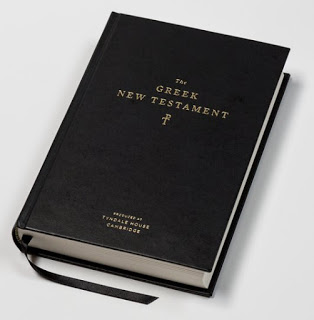
The Greek New Testament, Produced at Tyndale House, Cambridge está disponível em STEP Bible.

The Greek New Testament, Produced at Tyndale House, Cambridge


Initial thoughts on the Tyndale House Greek New Testament – By Peter Gurry

Dan Wallace, Larry Hurtado, James Snapp, Todd Scacewater, and Brice Jones have all given us their first impressions on the Tyndale House Greek New Testament (THGNT) and, since I have now had some time to look over my gratis copy, I thought I would share some of mine.

Fonte: Evangelical Textual Criticism – Monday, November 13, 2017

Morreu meu colega Luiz Henrique Bugnolo


Luiz Henrique Bugnolo: 30.08.1958 - 20.11.2017

Bugnolo foi meu aluno. Era Diretor Administrativo do CEARP e Professor na Faculdade de Teologia. Sua área era o Direito Canônico.

Bugnolo nasceu em 30 de agosto de 1958 e foi ordenado em 23 de maio de 1993. Cursou Direito na UNAERP, Filosofia e Teologia no CEARP (Ribeirão Preto) e Direito Canônico na Universidade Lateranense (Roma).

Diz a nota da Arquidiocese de Ribeirão Preto:

A Arquidiocese de Ribeirão Preto comunica com pesar o falecimento do padre Luiz Henrique Bugnolo, 59 anos, pároco da paróquia São Francisco de Assis, na tarde desta segunda-feira, 20 de novembro de 2017, na residência paroquial, em Ribeirão Preto (SP). Padre Bugnolo havia passado por procedimento cirúrgico para colocação de stent no coração no final do mês de outubro e estava em processo de recuperação.

A Igreja São Francisco de Assis, na Rua São Francisco de Assis, 230, Castelo Branco Novo, estará aberta a partir das 20 horas, desta segunda-feira, (20), para momentos de oração da comunidade, no aguardo da chegada do caixão com o corpo para início do velório. A Igreja permanecerá aberta durante a madrugada para o velório.

A missa de corpo presente será presidida pelo arcebispo Dom Moacir Silva, às 8 horas da terça-feira, (21). Terminada a missa o caixão com o corpo seguirá para a paróquia Divino Espírito Santo, em Serra Azul, onde o corpo será velado. O sepultamento está marcado para as 16 horas no Cemitério Municipal de Serra Azul.

Uma introdução aos Manuscritos do Mar Morto

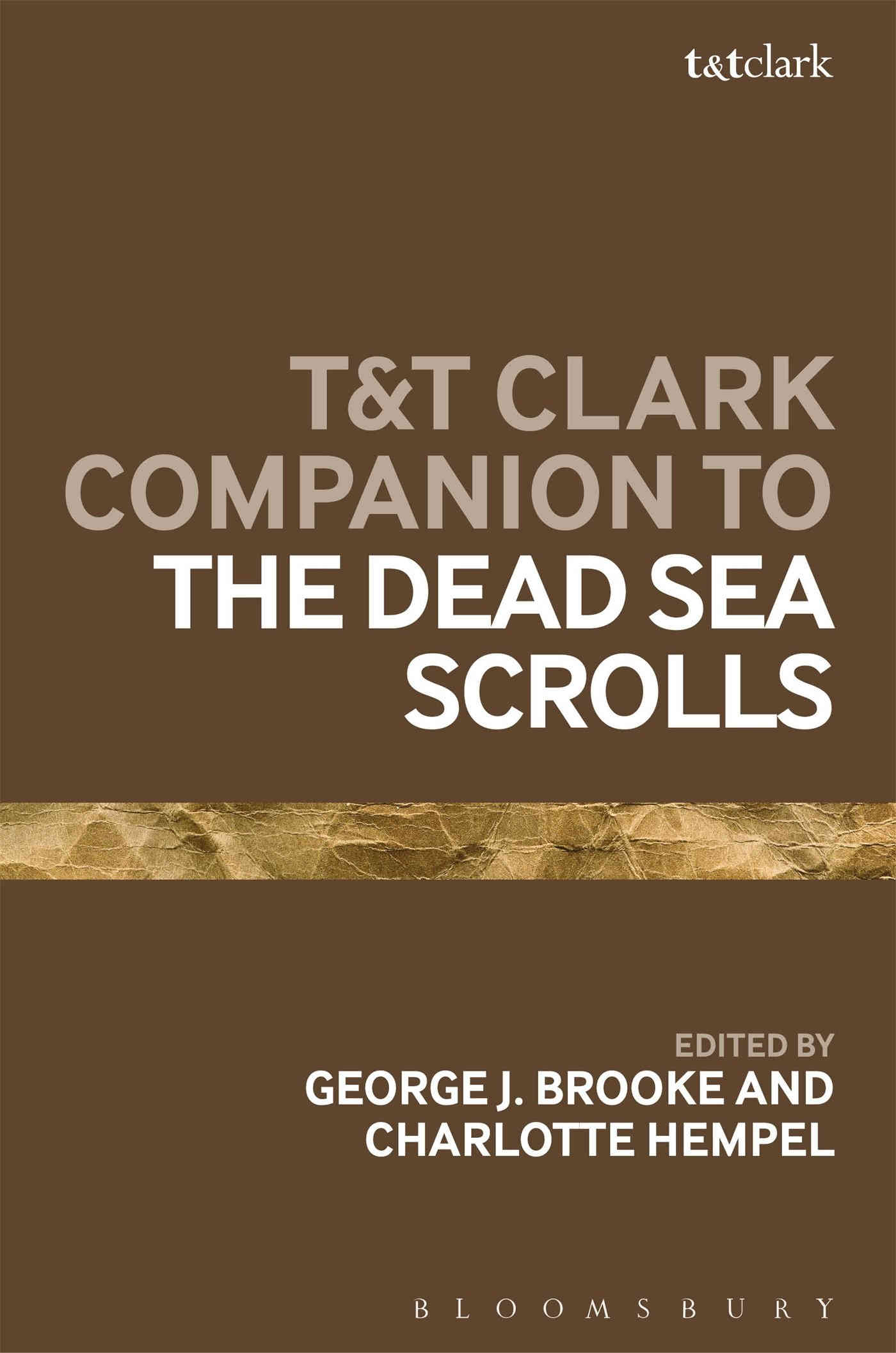
BROOKE, G. J. ; HEMPEL, C. T&T Clark Companion to the Dead Sea Scrolls. London: Bloomsbury, 2018, 512 p. – ISBN 9780567352057

BROOKE, G. J. ; HEMPEL, C. T&T Clark Companion to the Dead Sea Scrolls. London: Bloomsbury, 2018, 512 p.

In 30 concise articles all of the key texts and documents are examined. A section on the complex methods used in anaylzing the scrolls then follows before the focus moves to consideration of the scrolls in their various contexts; political, religious, cultural, economic, historical. The genres ascribed to groups of texts within the scrolls are examined in the next section with due attention given to both past and present scholarship. The main body of the companion then concludes with crucial issues and topics discussed by leading scholars. The book finishes with appendices and indexes giving: timelines, lists of kings, family trees of the Seleucids, Ptolemies, Hasmoneans, lists of places and scrolls, information on electronic resources and classified bibliographies. The volume is illustrated throughout with some 60 images enabling readers to consider key texts from the scrolls not only in transcription but simultaneously with photographs.

George J. Brooke is Rylands Professor of Biblical Criticism and Exegesis at the University of Manchester, UK. Charlotte Hempel is a Reader in Hebrew Bible and Second Temple Judaism at the University of Birmingham, UK.

Para além dos textos: um retrato arqueológico de Israel e Judá

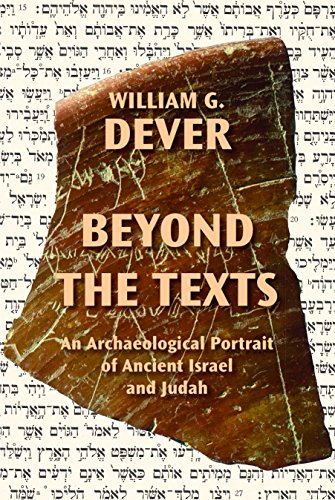
DEVER, W. G. Beyond the Texts: An Archaeological Portrait of Ancient Israel and Judah. Atlanta: SBL Press, 2017, 772 p. – ISBN 9780884142188.

DEVER, W. G. Beyond the Texts: An Archaeological Portrait of Ancient Israel and Judah. Atlanta: SBL Press, 2017, 772 p.

William G. Dever offers a welcome perspective on ancient Israel and Judah that prioritizes the archaeological remains to render history as it was — not as the biblical writers argue it should have been. Drawing from the most recent archaeological data as interpreted from a non theological point of view and supplementing that data with biblical material only when it converges with the archaeological record, Dever analyzes all the evidence at hand to provide a new history of ancient Israel and Judah that is accessible to all interested readers.

Features:
. A new approach to the history of ancient Israel
. Extensive bibliography
. More than eighty maps and illustrations

William G. Dever is Distinguished Visiting Professor at Lycoming College in Williamsport, Pennsylvania, and Professor Emeritus at the Arizona Center for Judaic Studies at the University of Arizona.

O contexto do livro de Rute

Terminei de ler Rute com o segundo ano de Teologia do CEARP ontem. Em perspectiva muito próxima à deste autor. Confira meu artigo Leitura socioantropológica do livro de Rute.

The Book of Ruth: Origin and Purpose – By E. Allen Jones III

The Bible and Interpretation – November 2017

As a last option for understanding Ruth, I would offer that Ruth does fit well when set against the background of the early post-exilic period. The literature on this time is vast and continues to grow, but it is safe to say that the small community in Judea in the late 500s to early 400s B.C.E. conflicted over various societal issues, one of which was how they should define the boundaries of their community. The prophet Zechariah believed that Jerusalem would throng with foreigners who would count as Yhwh’s people (Zech 2:15[EV 11]), but other persons from the Ezra-Nehemiah narrative feel that foreigners have no part in the community (Ezra 4:1-3; 9:1-4; Neh 13:1-3). This is not to say that Ruth reacts directly to the Ezra-Nehemiah text, nor should we read Ezra-Nehemiah uncritically as plain history, but it is reasonable to hold that community cohesion and in-group/out-group questions were live topics at the time. Within this debate, we can see how Ruth provides a counterfactual to a certain exclusivist perspective toward outsiders. The text is not so bold as to claim that all non-Israelites/Judeans should count as people of Yhwh, but it does demonstrate that there are cases where a foreigner can reasonably measure up to the standard of a true Israelite.

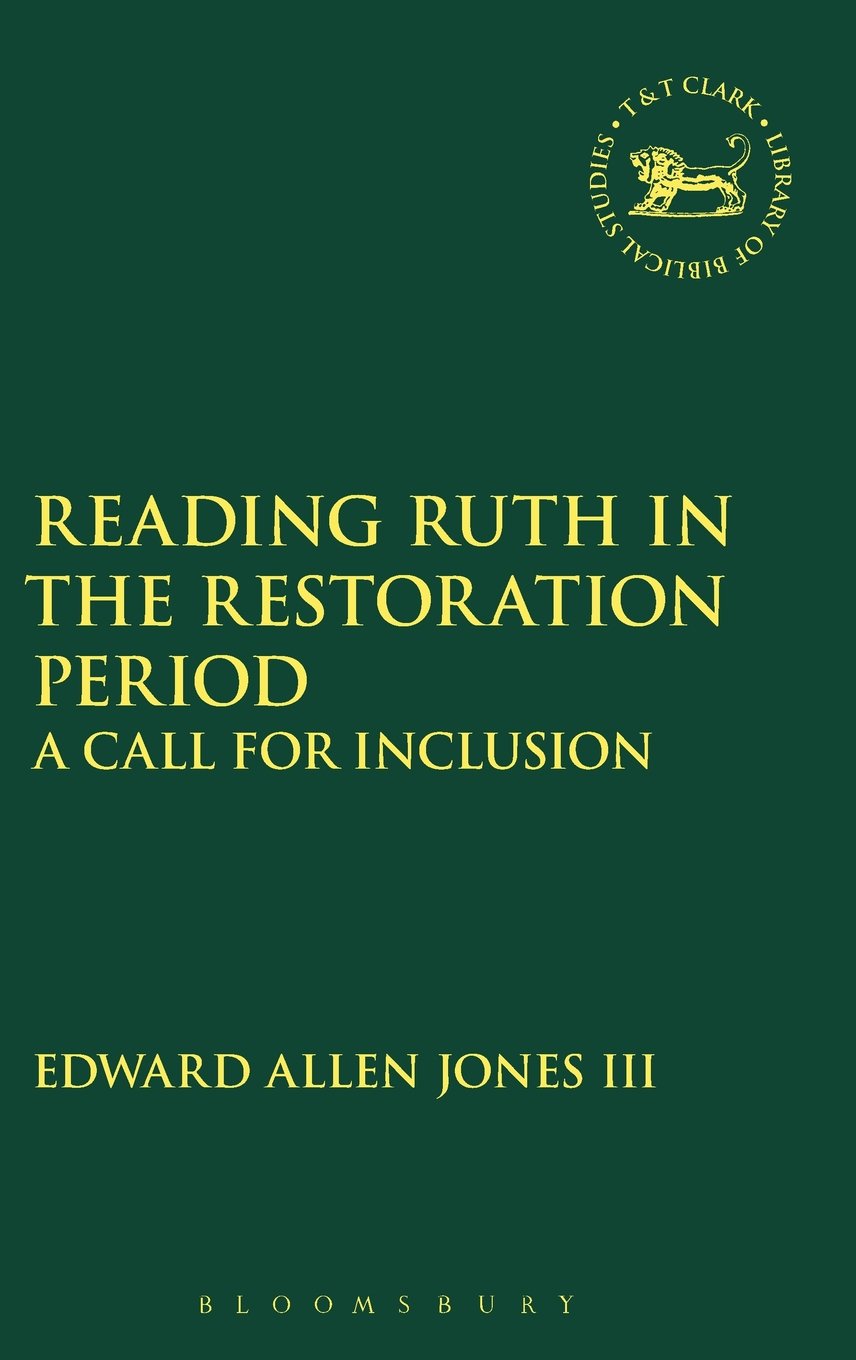
ALLEN JONES III, E. Reading Ruth in the Restoration Period: A Call for Inclusion. London: Bloomsburry T&T Clark, 2016, 224 p. – ISBN 9780567658449.

ALLEN JONES III, E. Reading Ruth in the Restoration Period: A Call for Inclusion. London: Bloomsburry T&T Clark, 2016, 224 p.

Most scholars of the Hebrew Bible/Old Testament recognize Ruth’s simplicity and beauty, yet there has been little consensus in critical scholarship related to the book’s origin and purpose. Opinions on the text’s date range from the early monarchic period down to the Post-Exilic period, and interpreters argue over whether the narrative served to whitewash David’s lineage, or if it held Ruth out as a positive example of Gentile inclusion in the Judean community. With an eclectic approach drawing on traditional exegesis, analysis of inner-biblical allusions, comparisons of legal and linguistic data, and modern refugee research, Edward Allen Jones III argues that Ruth is, indeed, best understood as a call for an inclusive attitude toward any Jew or Gentile who desired to join the Judean community in the early Post-Exilic period. Within the narrative’s world, only Boaz welcomes Ruth into the Bethlehemite community, yet the text’s re-use of other biblical narratives makes it clear that Ruth stands on par with Israel’s great matriarchs. Though certain segments of the Judean community sought to purify their nation by expelling foreign elements in the Restoration period, Yhwh’s loving-kindness in Ruth’s life demonstrates his willingness to use any person to build up his people.

Para conhecer o mundo babilônico do I milênio a.C.: NaBuCCo

Sobre o projeto

Neo-Babylonian Cuneiform Corpus (NaBuCCo) é um site que pretende colocar metadados textuais online de cerca de 20.000 documentos neobabilônicos publicados, incluindo registros legais, administrativos e epistolares. Estes documentos foram criados no I milênio a. C. e se originaram principalmente de cinco grandes cidades da Mesopotâmia durante esse período: Babilônia, Borsippa, Nippur, Sippar e Uruk. O site coleta todos os dados meta textuais das fontes, parafraseia seu conteúdo, disponibiliza os dados online e os liga, através de sites parceiros, aos documentos originais dos quais são extraídos. Além do catálogo de texto, o projeto oferece uma bibliografia detalhada e abrangente sobre a Babilônia no primeiro milênio a. C.

Espera-se que o projeto beneficie os pesquisadores. Na verdade, o banco de dados, com sua ferramenta de pesquisa avançada, páginas interligadas e extensa bibliografia, permitirá que estudiosos do campo da assiriologia e também de outros campos da pesquisa histórica de todo o mundo trabalhem com uma coleção abrangente de textos babilônicos em seus próprios projetos. Espera-se também que o catálogo, a bibliografia e o portal NaBuCCo sejam ferramentas úteis para levar o mundo da Babilônia até os não especialistas. Este portal fornecerá informações consistentes sobre cronologia e eventos históricos, principais cidades e topografia, vários aspectos da sociedade e da economia da Babilônia do I milênio a. C. e estabelece as bases para a compreensão dos próprios textos apresentados. O usuário comum também encontrará explicações básicas sobre os tipos e a origem dos textos apresentados.

A equipe é formada por pesquisadores da Universidade Católica de Leuven, Bélgica, da Universidade de Viena, Áustria, e da Universidade de Tel Aviv, Israel.

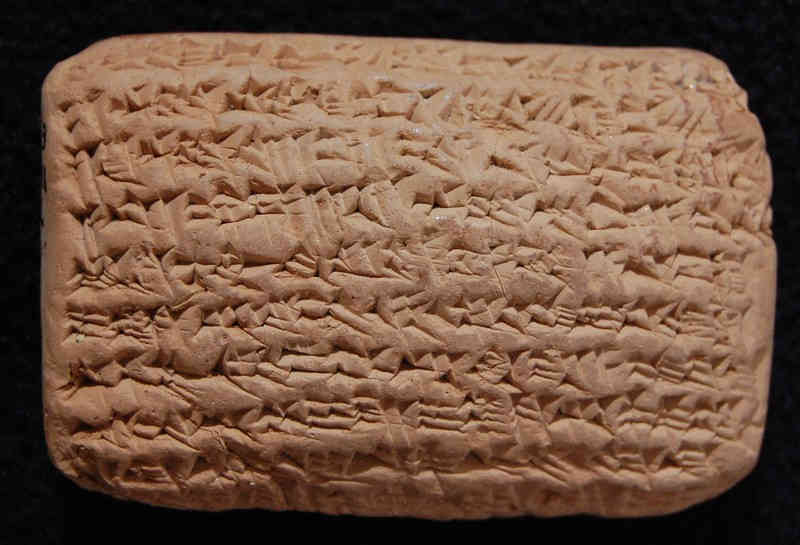
Tablet n.: BM 30912

About the project

NaBuCCo is a text-oriented website that aims at putting online textual metadata of an estimated 20,000 published Babylonian documentary sources including legal, administrative and epistolary records. These documents have been created between roughly 800 and the end of the pre-Christian era and primarily originate from the five large cities of Mesopotamia during that time: Babylon, Borsippa, Nippur, Sippar and Uruk along with their agrarian hinterland. The website collects all meta-textual data from the sources, paraphrases their content, makes the data available online, and links them (via partner websites) to the original source documents from which they are extracted.

In addition to the text catalogue, the project offers a comprehensive up-to-date bibliography on Babylonia in the first millennium BCE.

We hope that the project will benefit the research community. Indeed, the database with its advanced search tool, interlinked pages and extensive bibliography will enable scholars from within the field of Assyriology and also from other historical fields from all over the world to work with a comprehensive collection of Babylonian texts for their own research projects.

At the same time we hope that NaBuCCo’s catalogue, bibliography and to be developed portal will be a useful tool to delve into the Babylonian world for non-specialists. While the main addressees are specialist and non-specialists scholars, the project also aims at approaching those stakeholders who are not scientifically involved in this kind of source material. Being freely accessible online, the NaBuCCo database can not only be searched through and experienced by any historically interested individual, but – most importantly – provides proper tools, namely the paraphrases, to understand the archival texts from Babylonia also without background knowledge. The access to and the basic understanding of the Babylonian world and its thousands of texts will, furthermore, be eased by the 1st Millennium BC Babylon Portal to be provided on the NaBuCCo website in the future. This portal will provide profound information about chronology and historical events, main cities and topography, various aspects of society and economy of 1st-millinium-BCE Babylonia and lays the foundation for an understanding of the presented texts themselves. The common user will also find basic explanations about the types and origin of the texts presented.

NaBuCCo, short for Nabucodonosor (English Nebuchadnezzar), is the title of an opera by Verdi in which the Babylonian king Nebuchadnezzar II and the exile of the Judean population induced by him play a central role. We choose this name as acronym for a scientific project coined the Neo-Babylonian Cuneiform Corpus (NaBuCCo) that aims to make available clay tablets with cuneiform script originating from Babylonia or its immediate vicinity and dated to the Age of Empires (c. 770 BCE – 75 CE), a.o. tablets dated to the reign of Nebuchadnezzar II (c. 605-562 BCE), who is no doubt the most famous king of one of the empires, the Neo-Babylonian (Chaldean) Empire.

The NaBuCCo project was created as part of the research project Greater Mesopotamia: Reconstruction of its Environment and History (GMREH), whose funding is provided by the Belgian Science Policy Office – BELSPO in the framework of the Interuniversity Attraction Poles (IAP) (2012-2017).

Principal investigators: Kathleen Abraham, KU Leuven; Michael Jursa, University of Vienna, and Shai Gordin, Ariel University / Tel Aviv University.