Criado em 7 de dezembro de 2005, Observatório Bíblico está comemorando hoje 13 anos de existência.
Observatório Bíblico celebrates today 13 years online.
Blog sobre estudos acadêmicos da Bíblia
Criado em 7 de dezembro de 2005, Observatório Bíblico está comemorando hoje 13 anos de existência.
Observatório Bíblico celebrates today 13 years online.
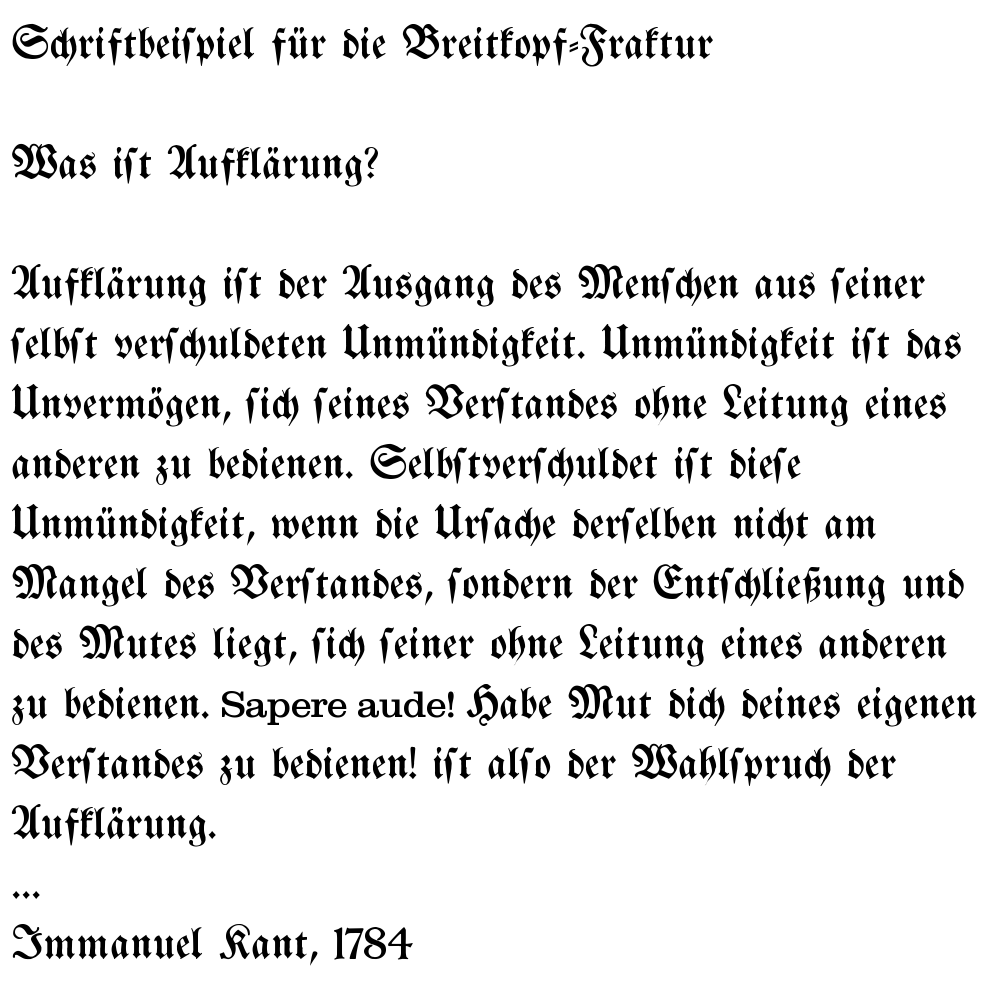
Como disse Kant (1724-1804), quando questionado sobre o significado da Aufklärung [pdf, em português, aqui]:
Sapere aude [Ouse saber]! Tenha a coragem de te servir de teu próprio entendimento. Eis a divisa do Iluminismo.
No original alemão [aqui e aqui]: Sapere aude! Habe Mut, dich deines eigenen Verstandes zu bedienen! ist also der Wahlspruch der Aufklärung.
Leia sobre isso aqui.
Seleção de postagens dos biblioblogs em novembro de 2018.
November 2018 Biblical Studies Carnival
Trabalho feito por Bob MacDonald em seu blog Dust.
Inside the cloak-and-dagger search for sacred texts – By Robert Draper: National Geographic – December 2018
In the shadowy world where religion meets archaeology, scientists, collectors, and schemers are racing to find the most precious relics.
Jim Davila, em PaleoJudaica.com, observa:
This is a very good article that deals with most of the recent stories about Bible-related (etc.) manuscripts, whether genuine or fake. These include Operation Scroll, which continues; Konstantin von Tischendorf and Codex Sinaiticus; the Sisters of Sinai and Codex Sinaiticus Syriacus; the Oxyrhynchus papyri; the Dead Sea Scrolls; P52, the Rylands fragment of the Gospel of John; the Museum of the Bible’s fake Dead Sea Scrolls fragments and Hobby Lobby’s improperly acquired cuneiform tablets; the no-longer-first-century fragment of the Gospel of Mark; and more.
RIP: Reading Obituaries in Ancient Judah – By Alice Mandell and Jeremy Smoak: The Ancient Near East Today – November 2018
Recent archaeological studies are beginning to shed greater light on the role that the senses play in human experience and religion. They argue that we need to move away from the tendency to treat sight and sound as the “higher senses” and touch, smell, and taste as the “lower senses.” This is why it is helpful to step back and imagine encountering inscriptions in their original settings. James Watts reminds us that ancient Israelite audiences were drawn to texts for their iconic, performative, and visual characteristics. Some inscriptions were installed as decorations or media within ritual spaces both inside and outside lived communities.
The story of the two stone tablets that YHWH gives Moses demonstrates how texts could become monuments around which communities constructed lives and politics. These tablets are hidden away in the ark and yet they play a pivotal role in Israel’s social and religious evolution. Ancient Hebrew texts “spoke” much more than their mere words—they signaled boundaries, access points, power dynamics, and social relations. And, they often communicated nuanced shades of meaning based upon different seasons, different times of day, and different audiences.
One set of inscriptions that illustrates the multi-sensory value of texts is from the tombs at Khirbet el-Qom, located several miles west of Hebron in the southern part of the territory of Judah. During the excavations of the tombs almost forty years ago, William G. Dever discovered several inscriptions written in Old Hebrew script on the walls of each tomb.
Faleceu em 27 de setembro de 2018, aos 89 anos de idade, o Professor Ugo Vanni, da Pontifícia Universidade Gregoriana (PUG) e do Pontifício Instituto Bíblico (PIB).
No dia 3 de dezembro de 2018 será prestada, no PIB, uma homenagem ao Professor Ugo Vanni e será feita uma apresentação de seu comentário ao livro do Apocalipse, fruto de suas aulas no PIB, publicado pouco depois de sua morte.
Além das aulas sobre o livro do Apocalipse, Hugo Vanni me orientou na Dissertação de Mestrado, A Parábola das Dez Virgens de Mt 25,1-13, concluída na Pontifícia Universidade Gregoriana em 1976.
O livro:
VANNI, H. Apocalisse di Giovanni. 2 volumi. Assisi: Cittadella Editrice, 2018, 1004 p. – ISBN 9788830815971.

Nell’accostare quest’opera poderosa, coloro che hanno avuto la fortuna di essere stati formati da padre Vanni riconosceranno immediatamente lo stile gustoso e avvincente del loro maestro e avranno la possibilità di contare su uno strumento che raccoglie in modo unitario e sistematico il suo insegnamento. Per gli altri lettori, invece, ci sarà la gioia di poter cogliere tutta la bellezza e la profondità del libro dell’Apocalisse, scoprendo il riflesso più autentico del disegno salvifio di Dio, così come viene contemplato, celebrato e vissuto nella Chiesa. (Dalla Prefazione di Luca Pedroli).
Ugo Vanni noto e stimatissimo biblista, nonché maestro dello Spirito, ha dedicato tutta la sua vita allo studio e all’insegnamento della Scrittura presso la Pontificia Università Gregoriana e il Pontificio Istituto Biblico. È stato uno dei massimi esperti dell’Apocalisse e dal 2000 è stato membro per diversi anni della Pontificia Commissione Biblica. In suo onore, per Cittadella Editrice, nel 2005 è stata pubblicata la raccolta di studi Apokalypsis. Percorsi nell’Apocalisse di Giovanni, con l’apporto di numerosi docenti di varie università di tutto il mondo.
Diz o programa no site do PIB:
Ricordo del Professore R. P. Ugo Vanni, S. J. e presentazione del suo commentario sul libro dell’Apocalisse
Il 27 settembre scorso è deceduto P. Ugo Vanni, S.J., professore emerito della Pontificia Università Gregoriana. Per 35 anni (dal 1969 al 2004) era stato professore «invitato» al Pontificio Istituto Biblico offrendo ogni anno, ininterrottamente, un corso e un seminario sul libro dell’Apocalisse. Qualche settimana dopo la sua morte è stato pubblicato dalla casa editrice Cittadella di Assisi il suo commentario al libro dell’Apocalisse, frutto dei suoi corsi di esegesi tenuti al Biblico. Il commentario, curato dal Prof. Luca Pedroli, allievo di P. Vanni, si compone di due volumi:
I. Testo greco articolato. Traduzione italiana. Annotazioni testuali, linguistiche e letterarie, pp. 224.
II. Introduzione e commento, pp. 780.
Lunedì, 3 dicembre 2018 [ore 16:30 – Aula Magna] ci sarà un ricordo di P. Vanni e una presentazione del commentario.
Saluto:
P. Michael Kolarcik, S.J. – Rettore del Pontificio Istituto Biblico
Interventi:
P. Dariusz Kowalczyk, S.J. – Decano della Facoltà di teologia della PUG
D. Luca Pedroli – Pontificio Istituto Biblico
P. Javier López, S.J. – Pontificia Università Gregoriana
D.ssa Enrichetta Cesarale – Pontificia Università Gregoriana
Lançada nova edição da tradução da Bíblia Sagrada da CNBB, em Brasília (DF) – 21/11/2018
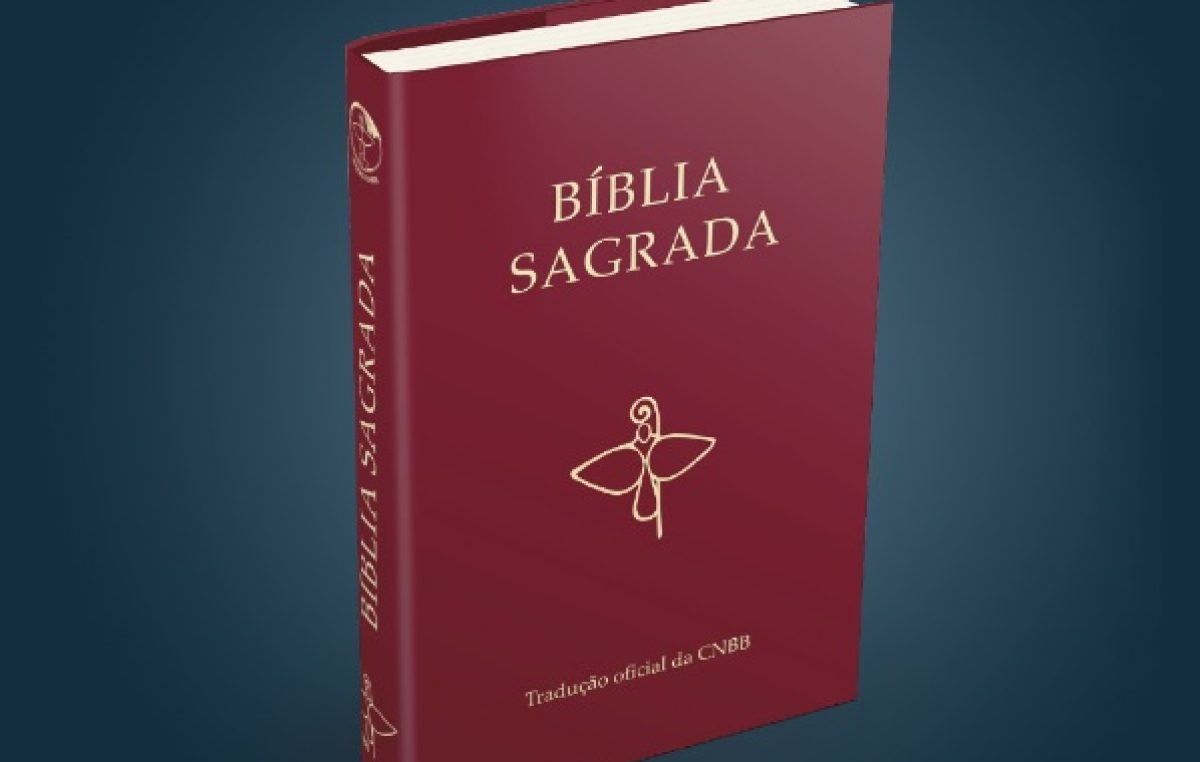
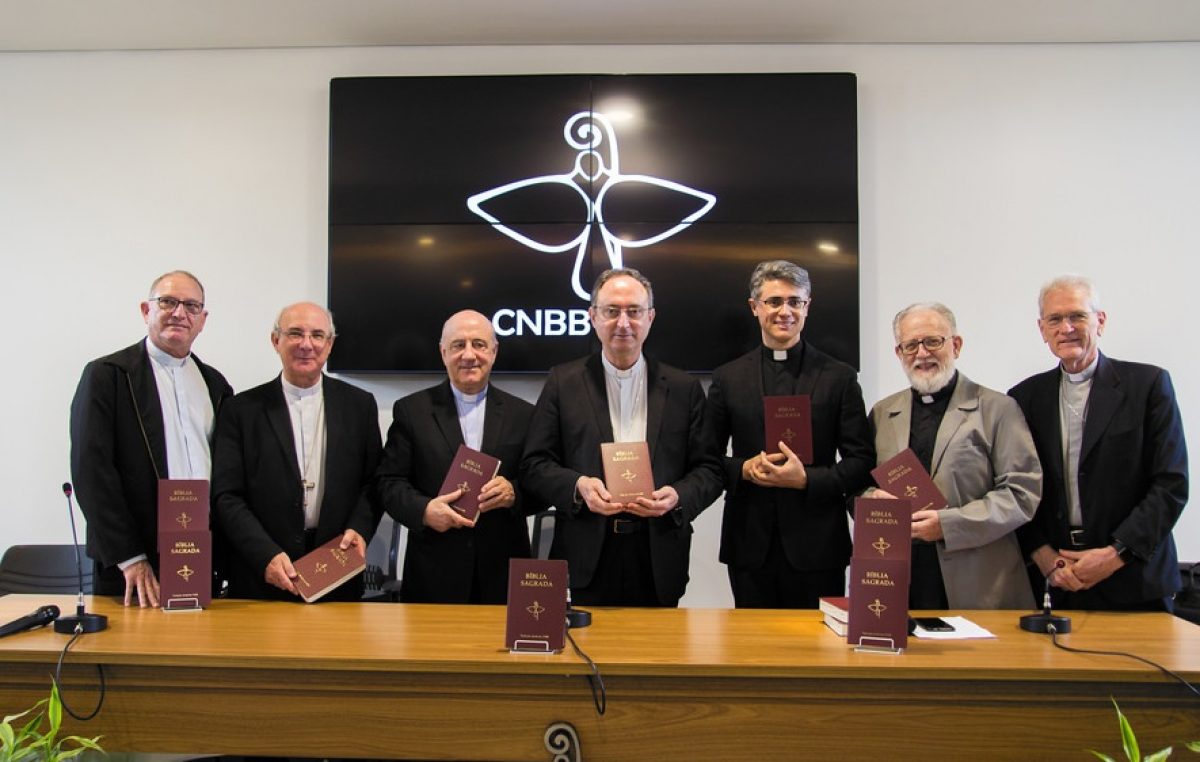
A Conferência Nacional dos Bispos do Brasil (CNBB) lançou nesta quarta-feira, 21 de novembro, a nova tradução oficial da Bíblia Sagrada. O ato aconteceu durante a reunião do Conselho Permanente da entidade e contou com a participação de bispos, padres e convidados. “Este é um momento de evangelização da nossa Conferência Episcopal. Nós tivemos um longo caminho, foram muitos anos de trabalho e de dedicação de muitas pessoas”, afirmou o secretário-geral da CNBB, dom Leonardo Steiner, na mesa de abertura.
Como recomenda o Concílio Vaticano II, a tradução oficial da Bíblia se baseia nos textos originais hebraicos, aramaicos e gregos, comparados com a Nova Vulgata – a tradução oficial católica. O projeto teve início em 2007, quando a coordenação de tradução e revisão, composta pelos padres Luís Henrique Eloy e Silva, Ney Brasil Pereira (in memoriam) e Johan Konings, fez a revisão integral conjunta, enquanto os professores padre Cássio Murilo Dias, dom Paulo Jackson Nóbrega de Sousa e Maria de Lourdes Lima colaboraram em algumas partes.
Durante o lançamento, o coordenador de tradução e revisão da Bíblia, padre Luís Henrique afirmou que a revisão se compôs de características diversas das traduções anteriores. De acordo com ele, no início visava-se um texto mais apurado em vista de outros objetivos como, por exemplo, o texto como referência para os documentos oficiais para os bispos do Brasil. Ele fez questão de enfatizar que, essa tradução, visou também uma maior facilitação à memória bíblica do país.
Assim como a Nova Vulgata, a nova Bíblia da CNBB leva em conta novas descobertas documentais e a crescente valorização das antigas traduções gregas, siríacas, egípcias e latinas, às vezes mais antigas ou de maior importância para a Igreja que os textos comumente considerados como os mais originais.
Padre Johan Konings, vice-coordenador de tradução e revisão da Bíblia destacou durante o lançamento que nem a Nova Vulgata, nem a nova tradução da Bíblia pretendem restabelecer um “texto original” único, mas procuram representar os textos que os primeiros cristãos conheceram, citaram e comentaram.
As introduções e notas, bem como os títulos e subtítulos das seções, embora aprovados pela Comissão para a Doutrina da Fé, não possuem caráter oficial, mas, baseadas em fontes científicas, fazem desta edição uma verdadeira “Bíblia de estudo”, servindo para cursos de Bíblia e de Teologia , em sintonia com as orientações do Magistério católico. Segundo o presidente da Comissão para a Doutrina da Fé da CNBB, dom Pedro Carlos Cipollini, a tradução é importante para a Igreja no Brasil porque serve de referencial. “A CNBB tem uma tradução aprovada e isso faz a diferença no sentido de que dá uma segurança maior no uso desse texto nas várias atividades da nossa Igreja”, disse o bispo.
Ao final do lançamento, o presidente da CNBB, dom Sergio da Rocha agradeceu aos exegetas e a todos os que colaboraram no aprimoramento das várias edições da Bíblia da CNBB, e de modo especial, nesta nova tradução. “Confiamos esta Bíblia Sagrada – Tradução Oficial da CNBB a Maria, Mãe da Igreja, discípula fiel do Senhor, que acolheu, meditou e cumpriu a Palavra”, disse o bispo.
Disponível para venda no site da Editora da CNBB.
Leia Mais:
Ler a Bíblia no Brasil hoje
Um trecho do relato da criação do homem, segundo o Livro Eslavo de Henoc.
Este é um apócrifo apocalíptico proveniente da Palestina ou do Egito. Foi escrito por um autor judeu ou judeu-cristão do século I d.C. A língua original era o grego. A versão que temos está em eslavo antigo.
Esta tradução em espanhol está no IV volume, de 1984, p. 177-178, da obra de DIEZ MACHO, A.; PIÑERO, A. (eds.) Apócrifos del Antiguo Testamento I-VII. Madrid: Cristiandad, 1982-2024. A tradução, do original, é de A. de Santos Otero.
Para entender melhor o contexto, confira o meu artigo Apocalíptica: busca de um tempo sem fronteiras. Sobre o Livro Eslavo de Henoc, confira, neste artigo, especialmente aqui.
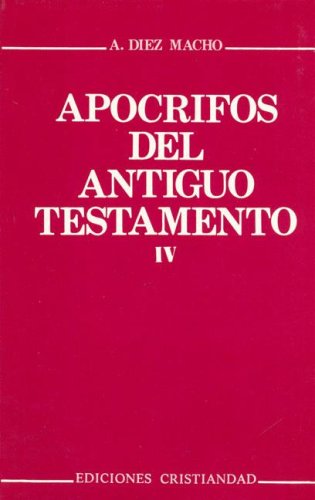
El sexto día di órdenes a mi Sabiduría para que creara al hombre, partiendo de siete elementos, a saber: su carne de la tierra, su sangre de rocío y del sol, sus ojos del abismo de los mares, sus huesos de piedra, su pensamiento de la celeridad angélica y de las nubes, sus venas y sus cabellos de hierbas de la tierra, su alma de mi propio espíritu y del viento. Y le doté de siete sentidos: oído en relación con la carne, vista para los ojos, olfato para el alma, tacto para los nervios, gusto para la sangre, consistencia para los huesos y dulzura para el pensamiento. Y me ingenié para que hablara palabras sagaces. Creé al hombre partiendo de la naturaleza visible e invisible, de ambas a la vez, muerte y vida; y la palabra conoce la imagen lo mismo que a cualquier otra criatura, pequeña en lo grande y grande en lo pequeño. Y le dejé establecido en la tierra como un segundo ángel, honorable, grande y glorioso. Y le constituí como rey sobre la tierra, teniendo a su disposición un reino gracias a mi Sabiduría. Y entre mis criaturas no había nada parejo a él sobre la tierra. Y le asigné un nombre que consta de cuatro elementos: Oriente, Occidente, Norte y Sur. Y puse a su disposición cuatro estrellas insignes, dándole por nombre Adán. Le doté de libre albedrío y le mostré dos caminos, la luz y las tinieblas. Entonces le dije: “Mira, esto es bueno para ti y aquello malo” (11,57-65).
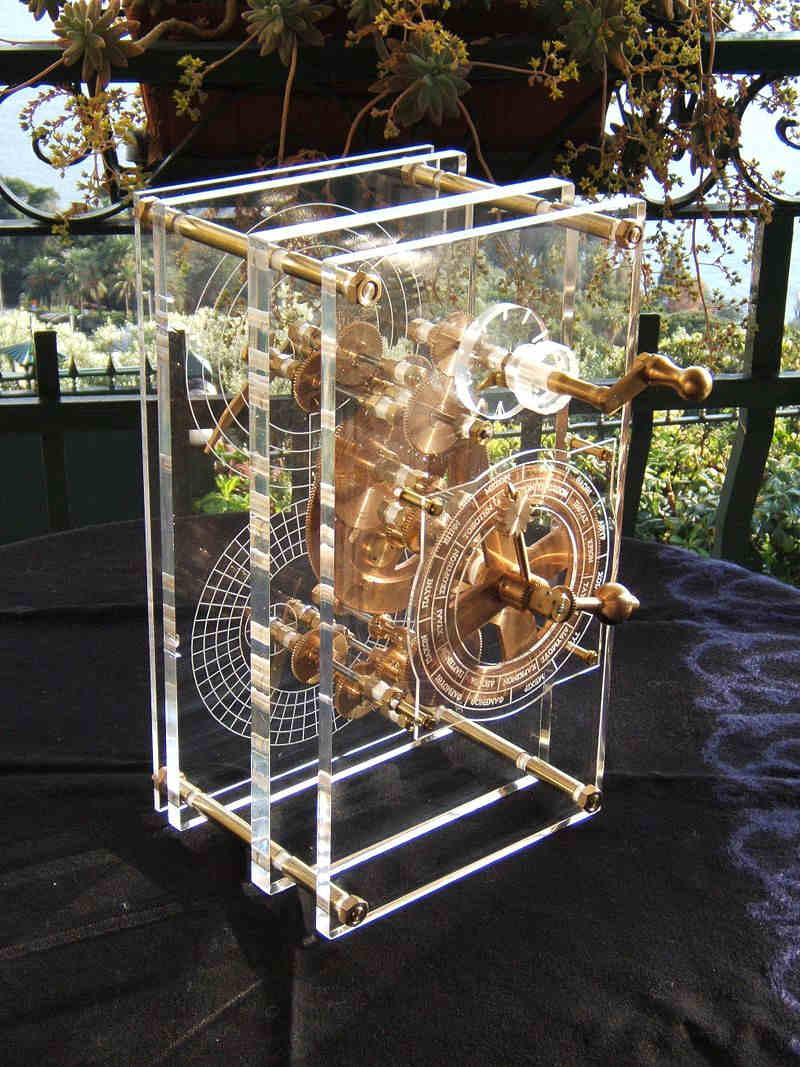
Foi encontrada mais uma peça do Mecanismo de Anticítera? Ainda é cedo para dizer. O jornal israelense Haaretz diz que sim, mas confira, no Twitter, aqui.
De qualquer maneira, é uma boa oportunidade para conhecer o mais antigo “computador analógico” até agora descoberto.
:: Peça do mais antigo computador da História é encontrada no Mar Egeu – AH: 14.11.2018
Disco de bronze foi descoberto no mesmo local onde o misterioso Mecanismo de Anticítera, computador analógico de 2100 anos, havia sido encontrado
Um disco de bronze foi encontrado por arqueólogos mergulhadores no fundo do Mar Egeu, próximo à ilha de Anticítera. Os especialistas acreditam que a peça é a parte que faltava da Máquina de Anticítera, computador analógico da Grécia antiga que desapareceu no mesmo local há 2 200 anos. Os restos do computador, datado de 87 a.C., foi resgatado em 1901, a uma profundidade de cerca de 43 metros na costa da ilha de Anticítera, localizada entre Cítera e Creta. O objeto, que parecia uma pedra corroída e esverdeada, não recebeu muita atenção. Em 1971, o físico britânico Derek de Solla Price submeteu o objeto a uma série de análises. Com o auxílio de raios gama, ele descobriu que a “pedra” era, na verdade, um complexo calculador astronômico. Formado por 27 engrenagens de bronze, o aparelho empregava, no século 1 a.C., um tipo de engrenagem que acreditava-se que havia sido desenvolvida apenas no século 16. A Máquina de Anticítera era utilizada para guiar navios, realizar operações matemáticas básicas, calcular a órbita da Lua, do Sol e dos cinco planetas mais próximos da Terra. Também era capaz de prever eclipses lunares e solares. Por isso, é considerada o computador analógico conhecido mais antigo.
:: Missing Piece of Antikythera Mechanism Found on Aegean Seabed – By Philippe Bohstrom – Haaretz- Nov 15, 2018
Bronze disk unearthed by archaeologists in same wreck where original 2,200-year-old computer had been found; also located bits of the ship that Jacques Cousteau and looters hadn’t destroyed
More than 2,200 years after it sank beneath the waves, diving archaeologists have possibly found a missing piece of the Antikythera Mechanism, the fantastically complicated, advanced analog “computer” found in a shipwreck off a Greek island. Scanning shows the encrusted cogwheel to bear an image of Taurus the bull. The Antikythera Mechanism was discovered in 1901, technically speaking. An encrusted lump was salvaged by Greek sponge divers in clunky metal diving suits from the Mediterranean seabed. Not that anybody realized what it was at the time. It would take decades and advanced x-ray technology for scientists to realize that the “rock” was a wondrously advanced sophisticated analog calculator consisting of dozens of intermeshed gears. The Mechanism could do not only basic math: with dozens of exquisitely worked cogwheels, it could calculate the movements of the sun and moon, predict eclipses and equinoxes, and could be used to track the solar system planets, the constellations, and much more.
:: Antikythera anticlimax: ancient computer excitement a case of over-anticipation – By Jamie Seidel – News.com.au – November 14, 2018
The 2200-year-old Antikythera Mechanism, one of the most fascinating archaeological finds, has just suffered a big setback.
The analog computer has fascinated a generation of computer entrepreneurs. So a series of expeditions to the small island of Antikythera between Greece and Crete has been funded to see if more fragments of the mysterious device could be recovered. One tantalising piece was found on the seabed during an expedition last year. A heavily encrusted bronze disc, about 8cm wide. Now, a new article in the Israeli publication Haaretz has sent a quiver of anticipation around the world. It declared it to be a lost cog from the Anikythera mechanism itself. And, as it carried the sign of a bull — Taurus — it proves the machine was more complex than many dared dream. But … not so fast.
:: No, Archaeologists Probably Did Not Find a New Piece of the Antikythera Mechanism – By Jason Daley – Smithsonian.com – November 15, 2018
A bronze disc found near the shipwreck last year is likely not a cog wheel from the ancient Greek astronomical proto-computer
This week, word began to spread around some corners of the web that a new piece of the legendary ancient Greek computer known as the Antikythera Mechanism may have been found. But the claims, which surfaced following a Haaretz feature on the ongoing archaeological work in the area where the device was first uncovered, are misleading at best.
The Antikythera Mechanism is one of the most well-known and intriguing archaeological discoveries of all time. During a 1900-1901 investigation, sponge divers near the Greek island of Antikythera discovered the arms of bronze and marble statues reaching out of the seabed, remains of a shipwreck dating to the 1st or 2nd century B.C., and a rock-encrusted object that appeared to be a series of cogs and gears. Over the coming decades, researchers examined the mechanism, eventually determining it was likely a complex device that contained more than 30 gears used to calculate the date, position of planets, constellations and, perhaps, additional information. It was, in other words, a primitive sort of computer. But pieces of the salvaged device, including some cogs, were missing, presumably lying on the sea floor at the wreck site.
Researchers have since returned to the site in hopes of finding these lost pieces, including Jacques Cousteau who found bones at the wreck and pulled up bronze statues in 1976. Two other scientific expeditions took place in 2012 and in 2017.
It was during that last expedition that marine archaeologists from the Greek Ephorate of Underwater Antiquities and Lund University in Sweden uncovered more treasures including pieces of a bronze statue and an encrusted bronze disk with four tabs on it that appeared almost like a cog wheel. That piece, called the Taurus disk because it bears the image of a bull, is the artifact that Haaretz identified as a possible part of the mechanism. But even the article backpedals, conceding, “It will be difficult to prove what exactly the Taurus disk is: part of the original Antikythera Mechanism, part of a second such mechanism, if one existed, or something else entirely.”
As Jamie Seidel at News.com.au reports, experts have not publicly suggested that the disk functioned as a cog wheel. Rather X-rays of the disk conducted last year revealed that image of the bull and the four holes. Following the excavation, Sarah Gibbens of National Geographic wrote that the small disk was “reminiscent” of the Antikythera Mechanism, but that expedition co-leader Aggeliki Simossi said it was unclear what its purpose was. “It is maybe decoration for furniture or maybe a seal, or it could be an instrument,” as Simossi told Gibbens. “It is very early to say.”
While Haaretz and others reported the bull image suggests the disc was used in the machine to predict the position of the constellation Taurus, it does not appear to be finely crafted enough function as a cog wheel in the precision machine. As Seidel reports, in a best-case scenario, it may have adorned the case the Antikythera Mechanism was housed in, but there is no proven relation to the device.
That does not mean other bits of the mechanism aren’t to be found in the wreck. In fact, the expedition re-examining the wreck, called Return to Antikythera, holds out the possibility that more bits and pieces of the machine, which some believe may have been two distinct devices, can be found.
Whatever the case, the machine was truly ahead of its time, and the world wouldn’t see such intricate mechanical work again for 1,000 years. While we don’t know all we’d like about the mechanism, we are learning more about the ship it sailed on. It was likely a massive Greek grain ship, one of the largest ancient ships ever found, as archaeologist Brendan Foley, who led the new expeditions, tells Haaretz. At the times of its sinking, which likely happened in a storm, it was probably full of grain, statues and wealthy passengers, perhaps one who clung to his prized gadget as he sank into the sea.
Vídeos no Youtube mostram o funcionamento do Mecanismo de Anticítera.
Para saber mais, um livro: JONES, A. A Portable Cosmos: Revealing the Antikythera Mechanism, Scientific Wonder of the Ancient World. New York: Oxford University Press, 2017, 312 p. – ISBN 9780199739349.
Criada em 10 de novembro de 1999, Ayrton’s Biblical Page está comemorando hoje 19 anos de existência.
Ayrton’s Biblical Page celebrates today 19 years online.